
Painted Together: A TAP+ Collaborative School Mural at Abbey Primary School, Boyle, County Roscommon, 2025

In spring 2025, I spent ten weeks working with Lorraine and her Second Class pupils at Abbey Primary School in Boyle, County Roscommon, as part of a Teacher Artist Partnership+ (TAP+) Residency.
Together, we developed Painted Together, a collaborative school mural rooted in the children’s ideas, the landscape around Boyle and some of the stories connected to it.
The residency gave us the opportunity to approach the mural as a complete creative process rather than simply arriving at the wall with a finished design. Over the course of the project, the pupils explored drawing, visual storytelling, painting, mural design and spray-paint techniques before eventually taking their ideas outside and working at a much larger scale.
From TAP+ training to the residency
My connection with the project actually began the previous summer, when I completed the Teacher Artist Partnership Plus summer course in July 2024.
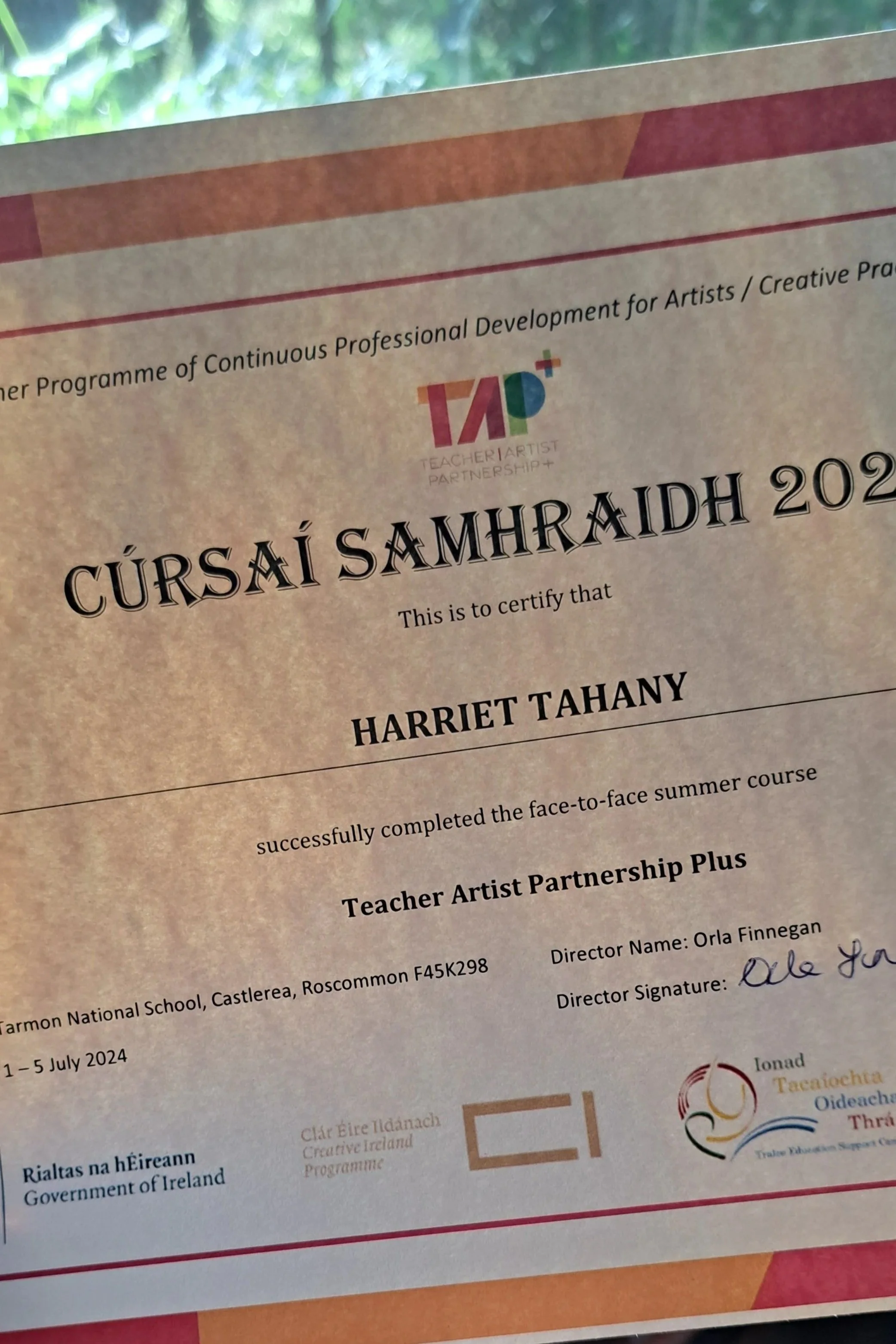
The course brought teachers and artists together to explore creative partnership in education and prepare artists and creative practitioners to work collaboratively in primary and special schools. The training was designed to lead into funded in-school residencies, putting that learning into practice alongside teachers and pupils.
It was during that week that I first met Lorraine.
Neither of us knew at the time that we would later be paired together. When the TAP+ residency placements were made, I was matched with Abbey Primary School in Boyle and discovered that Lorraine would be the teacher I would be working with.
Over the following ten weeks, Lorraine, her class of 26 Second Class pupils and I worked together to develop a collaborative mural for the school.
Looking at Boyle
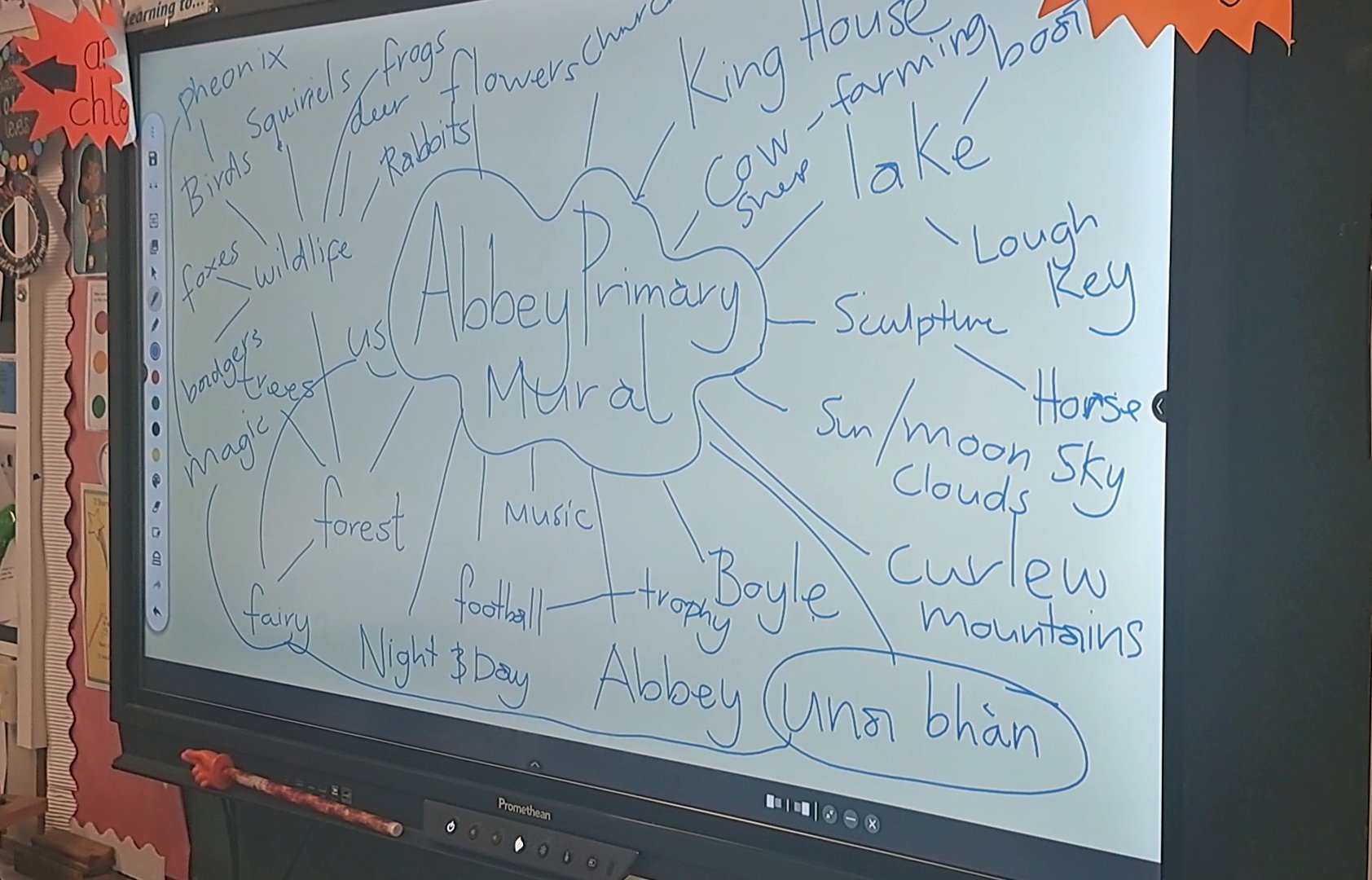
We started in the classroom with brainstorming, drawing and idea generation.
Rather than beginning with a predetermined mural design, we looked at Boyle and its surrounding landscape. The pupils worked from photographs of familiar places and landmarks, drawing what they saw and beginning to think about which parts of their locality felt important to them.
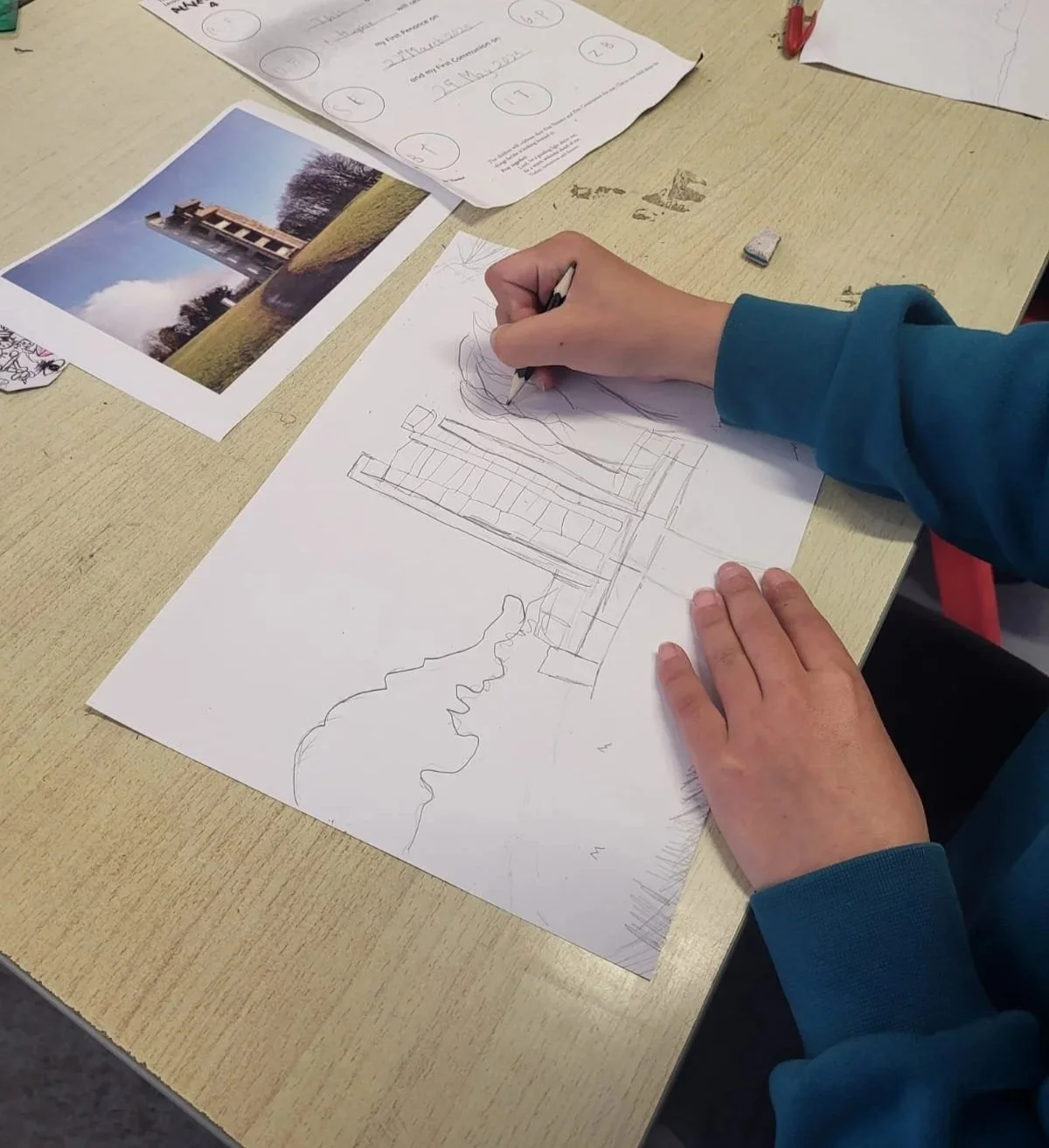
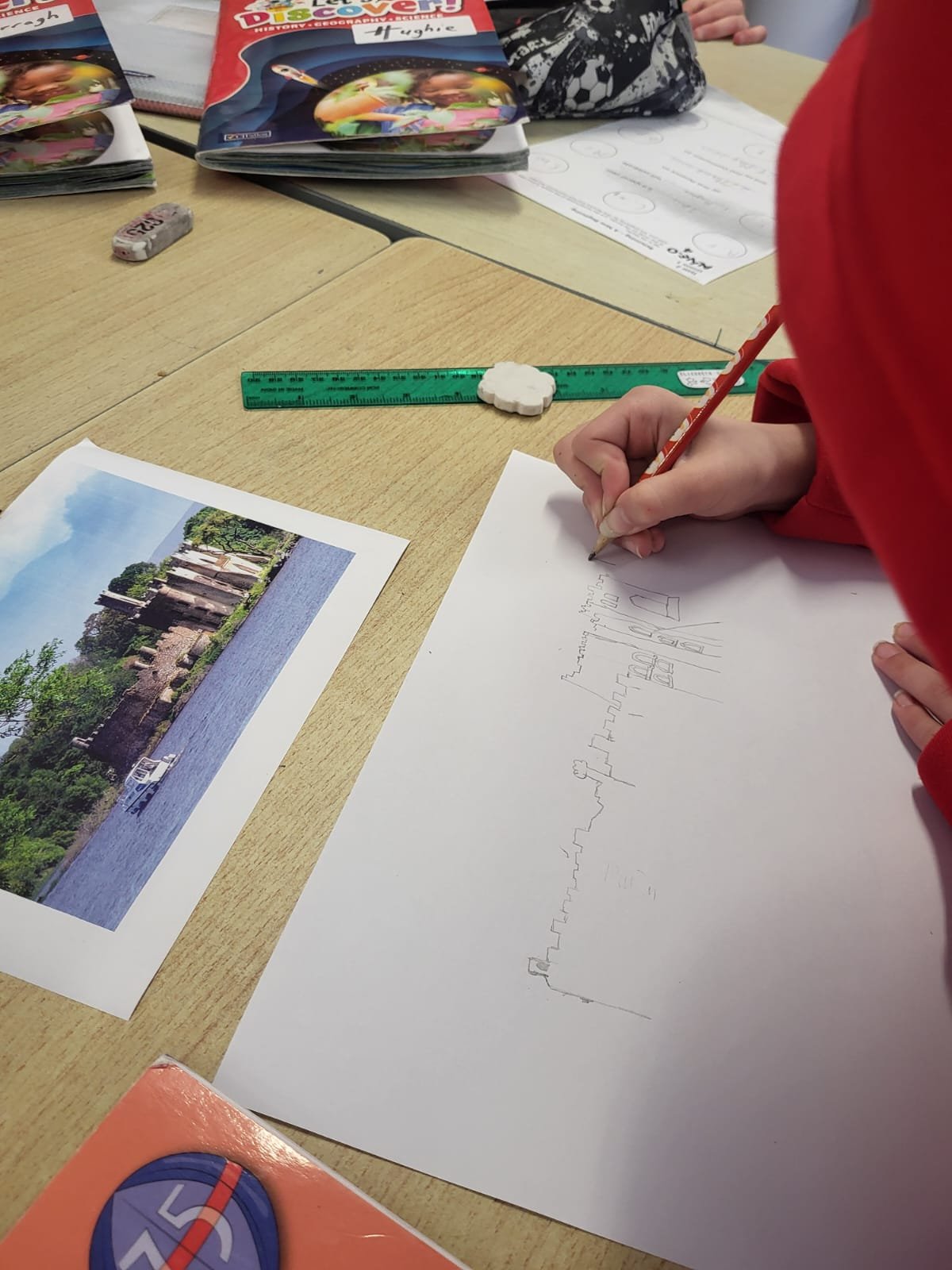
For me, this part of a residency is as important as the final painting.
I wanted the pupils to experience some of what an artistic practice actually involves: looking closely, gathering references, making drawings, trying different possibilities and allowing an idea to develop rather than expecting the first drawing to be the finished answer.
As more work accumulated, we could lay the drawings out together and begin looking at them collectively.
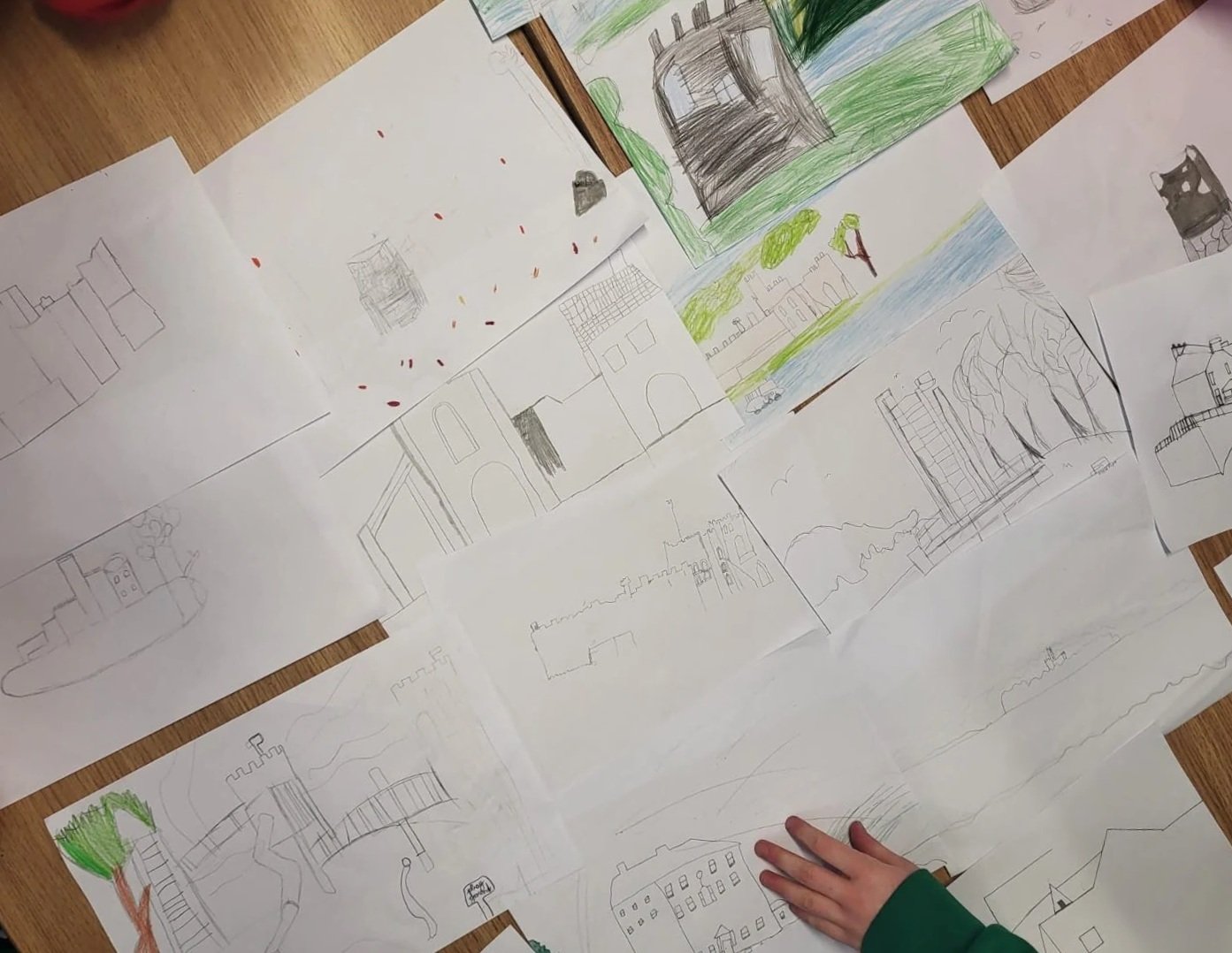
Individual drawings started to become part of a bigger visual conversation.
Finding the story
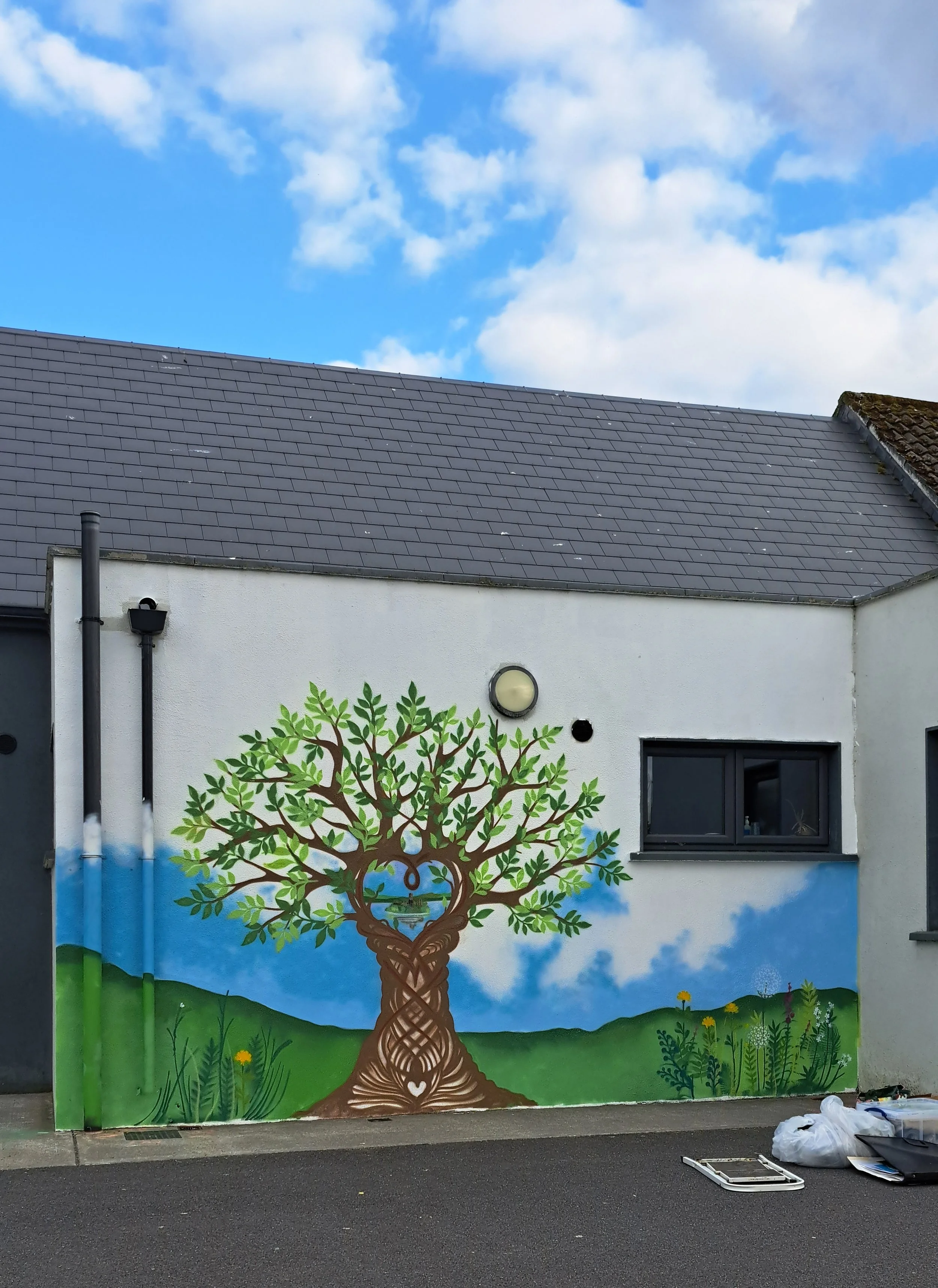
One of the central images that emerged was a large love-knot tree, with its intertwined trunk creating a heart-shaped opening.
Inside that heart sits the castle on Castle Island in Lough Key, referencing the local legend of Úna Bhán, a story of love and longing associated with the area.
The tree gave the mural a strong central structure while also creating a way of looking through the artwork towards the landscape beyond the school.
Around it, we began building a much more playful world.
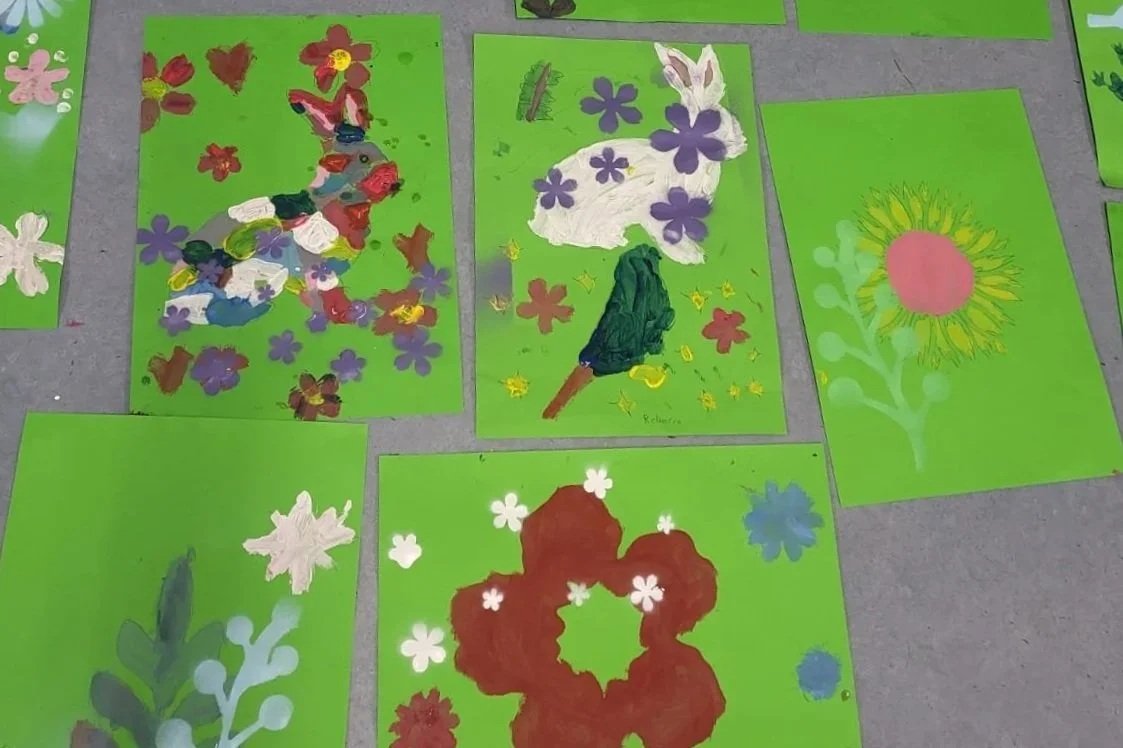
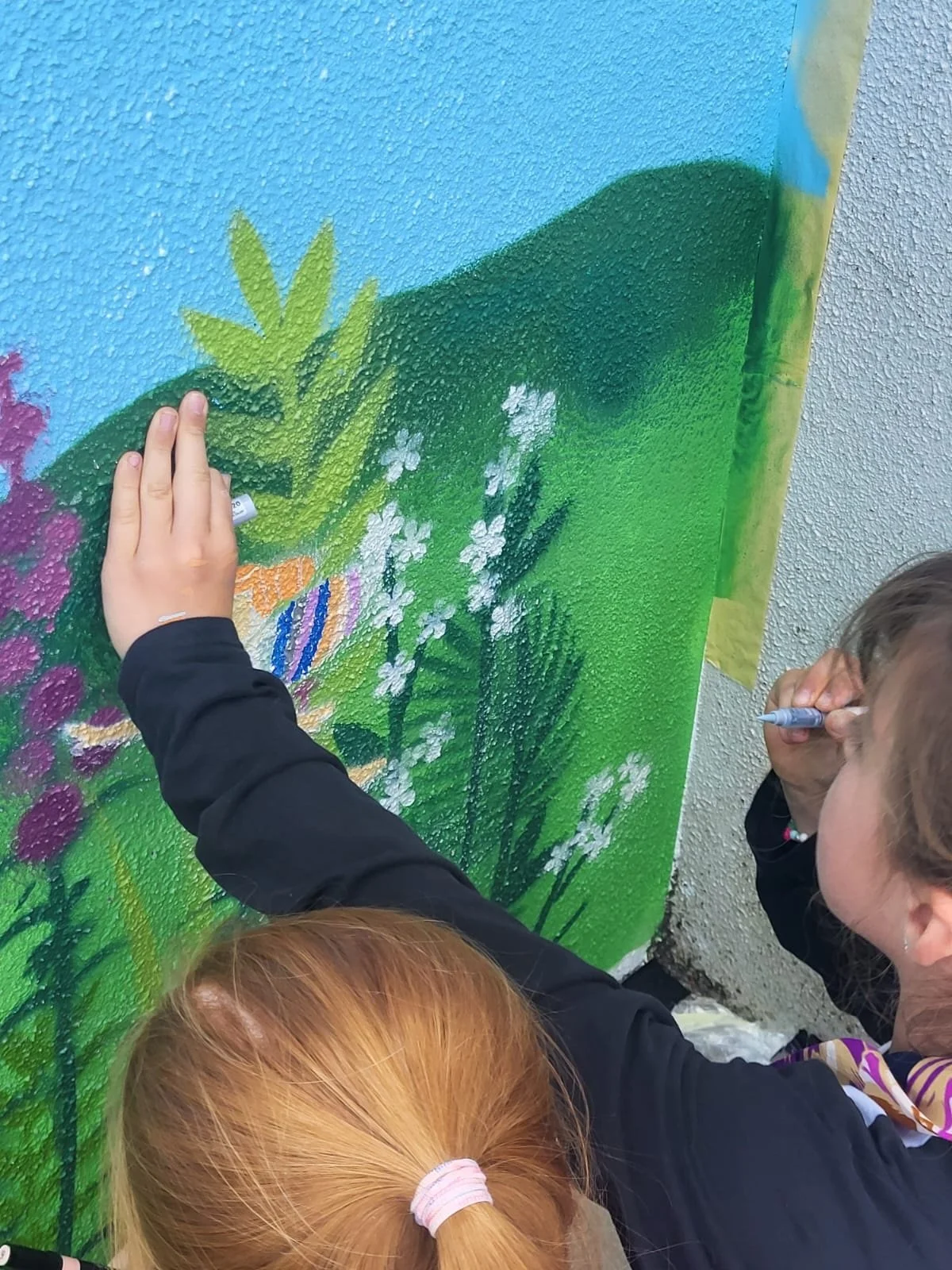
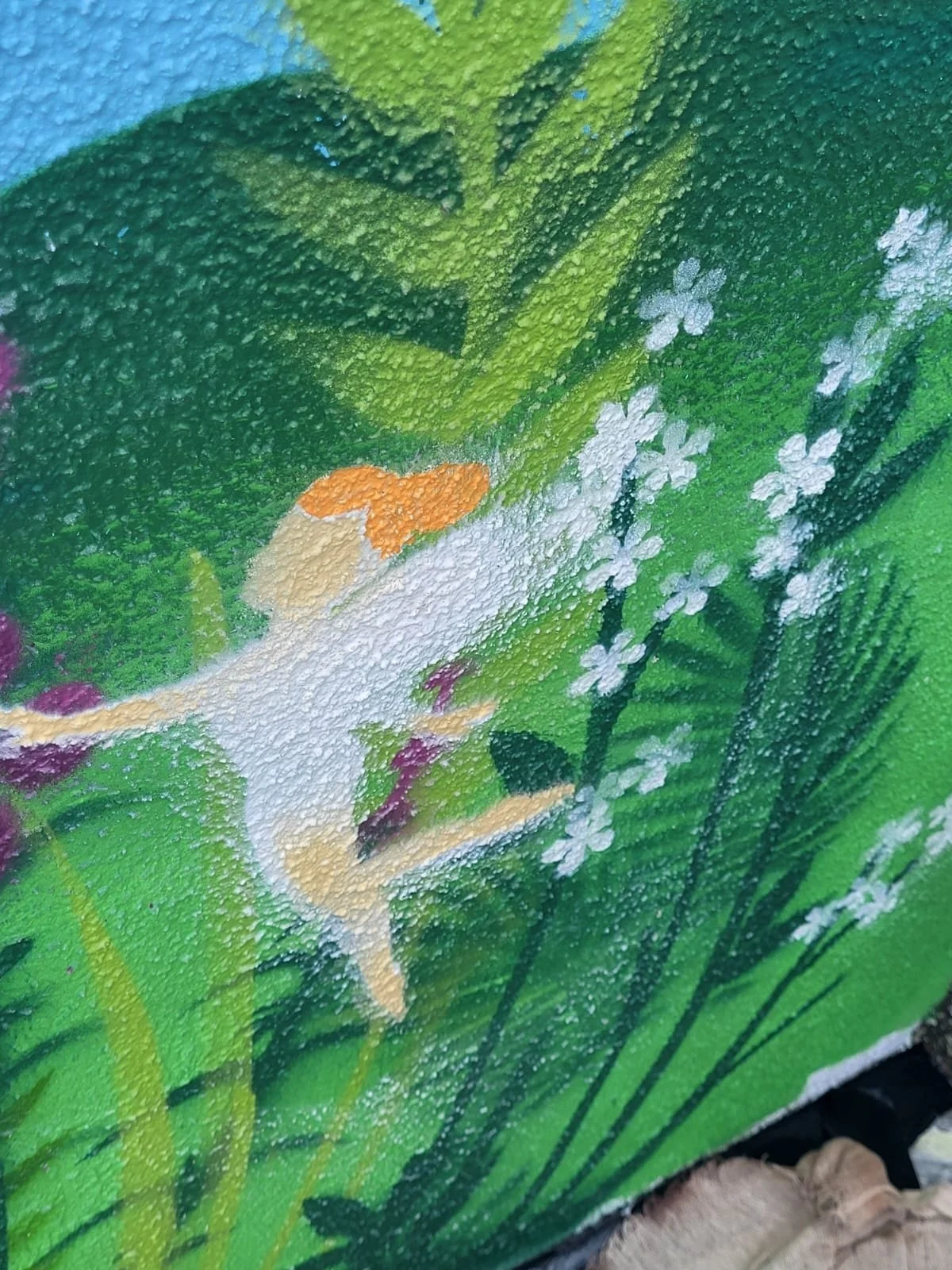
Wildflowers spread across the bottom of the composition and figures of children run, play and move through the landscape. Many of those elements grew directly from the drawings and experiments the pupils had been developing during our classroom sessions.
Learning through making
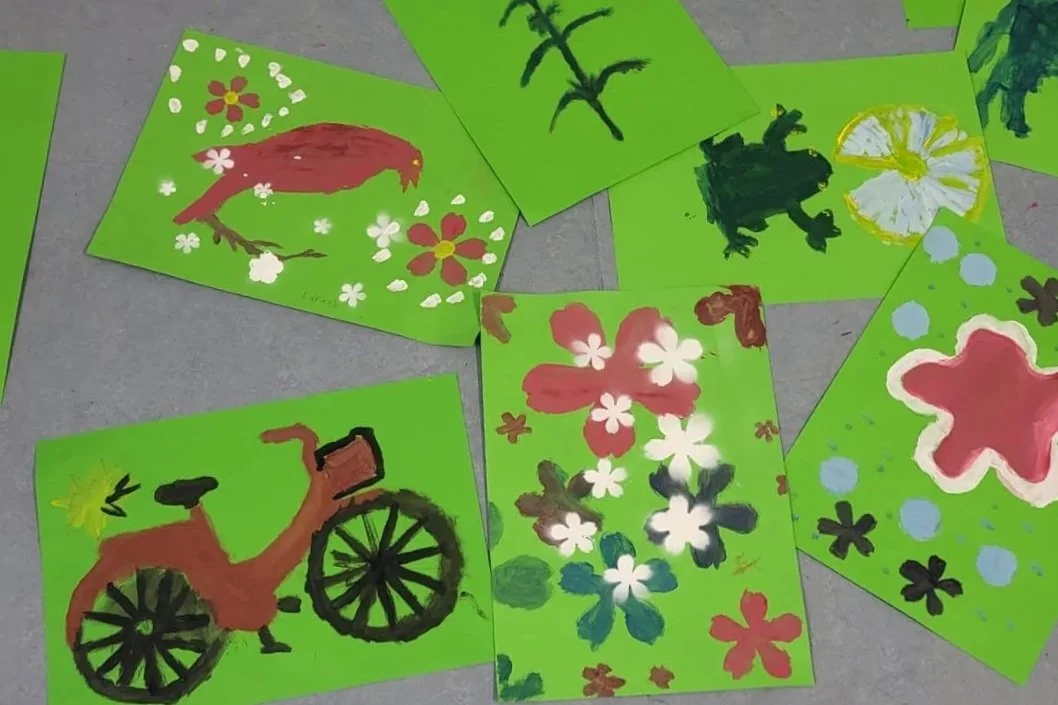
Before taking anything onto the wall, we spent time experimenting with how drawings could be transformed into painted forms.
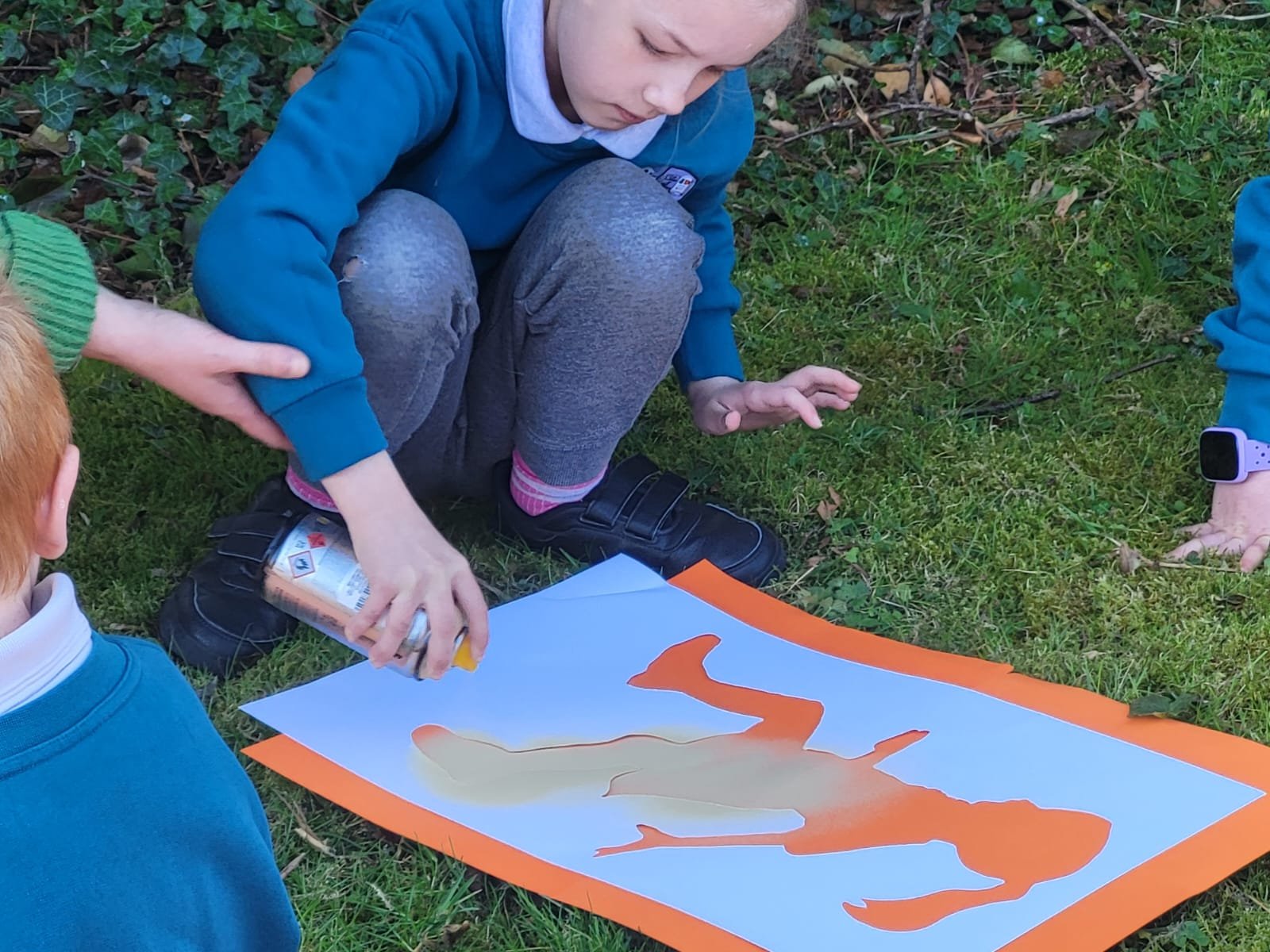
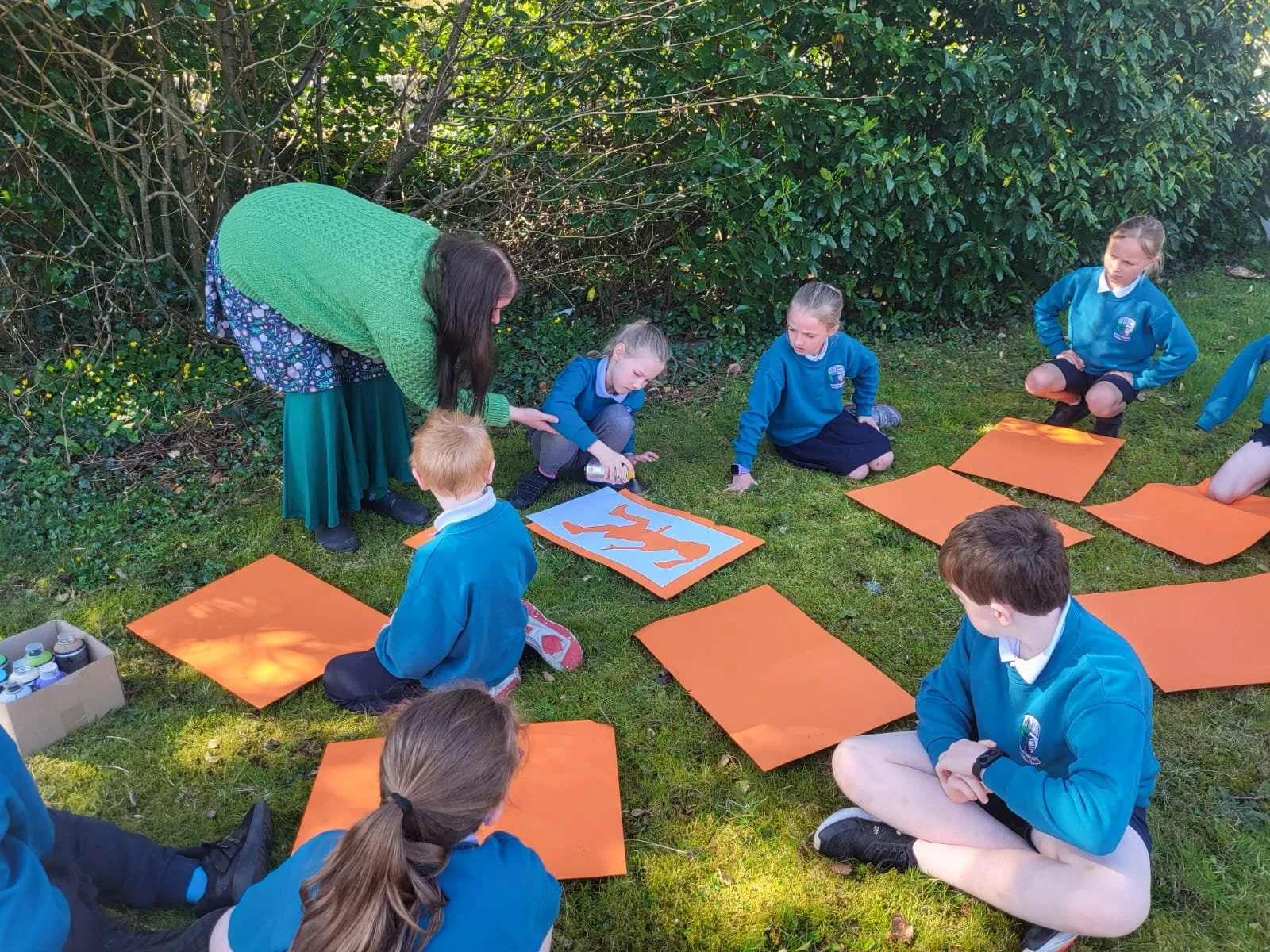
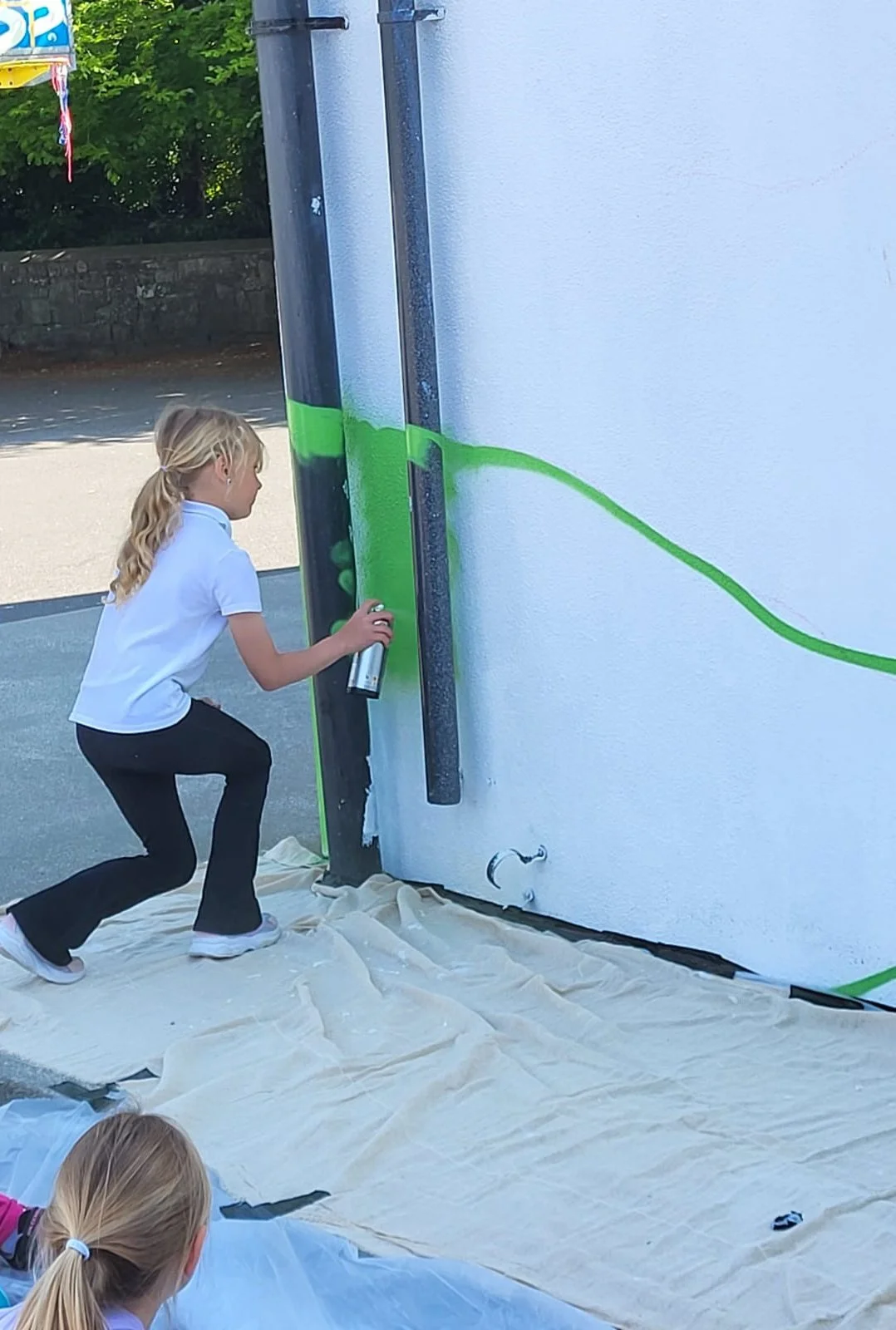
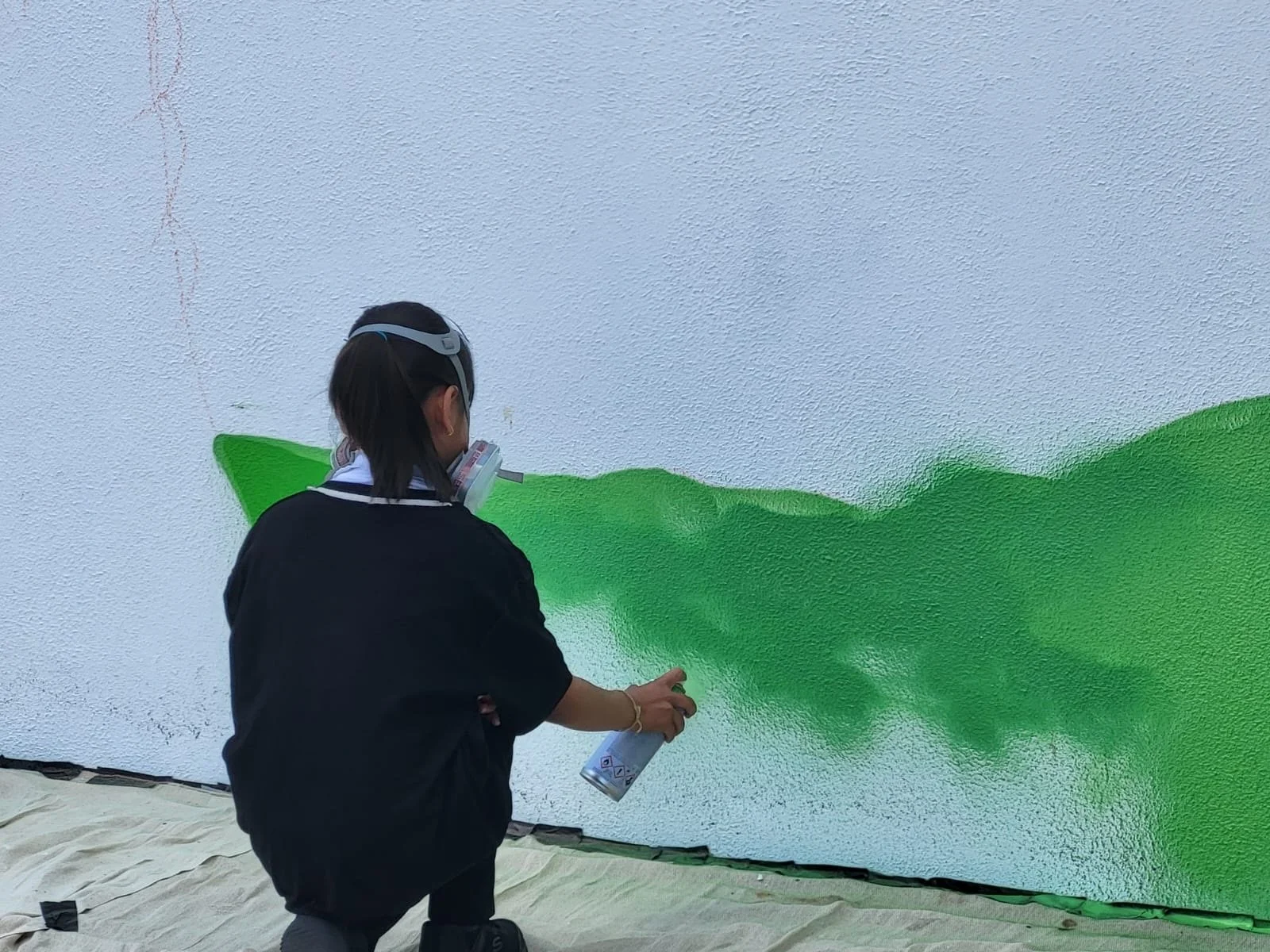
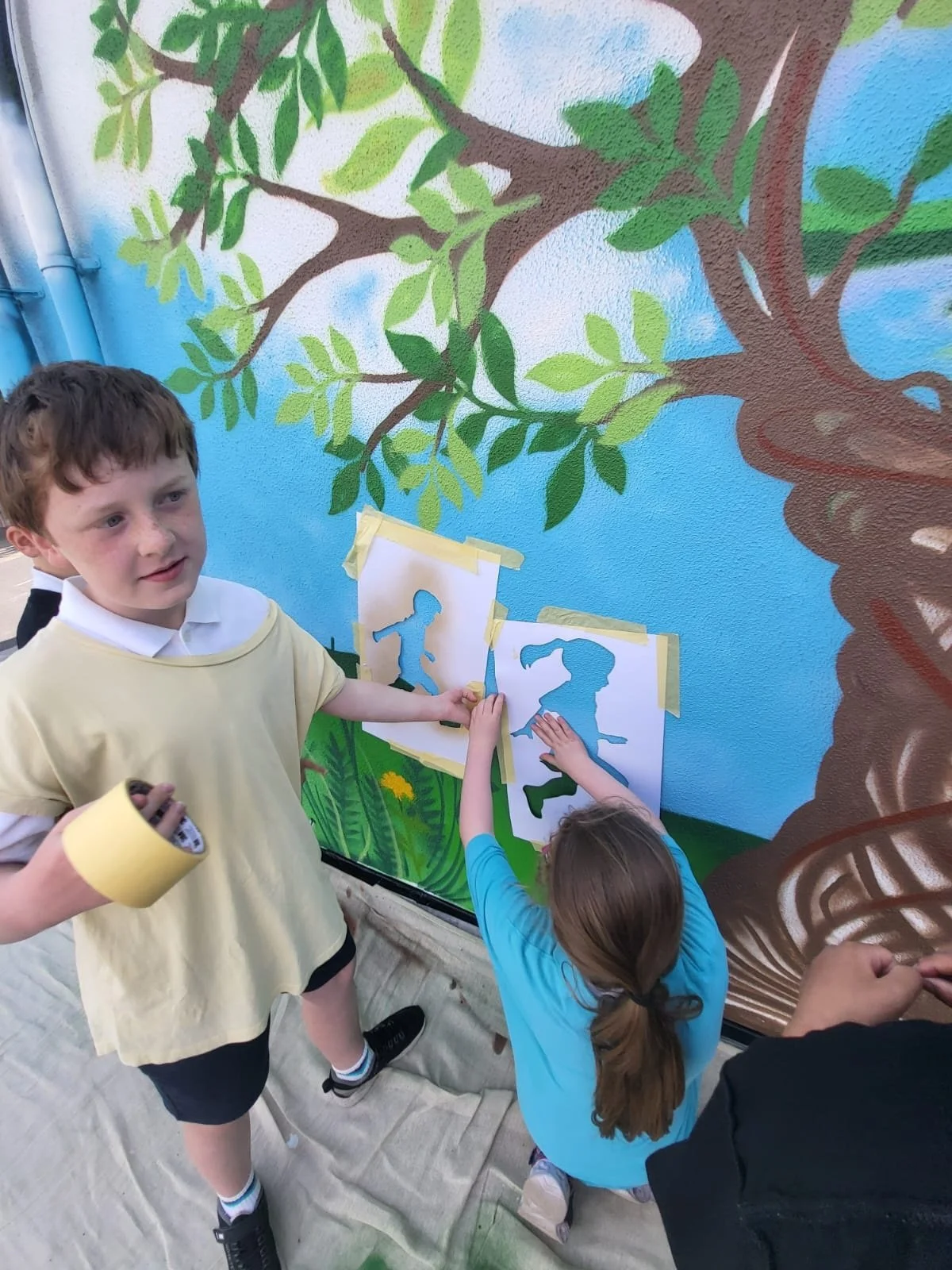
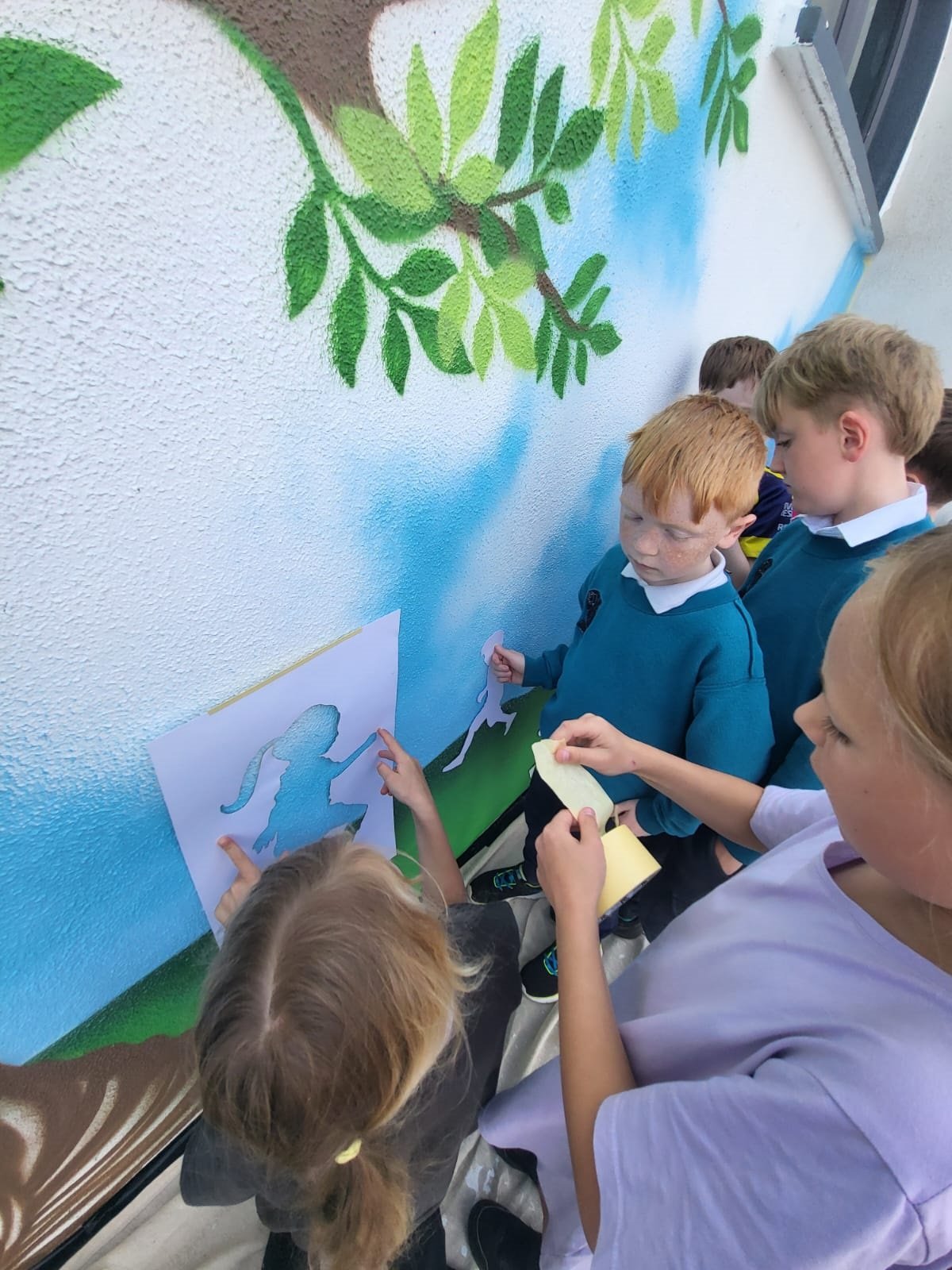
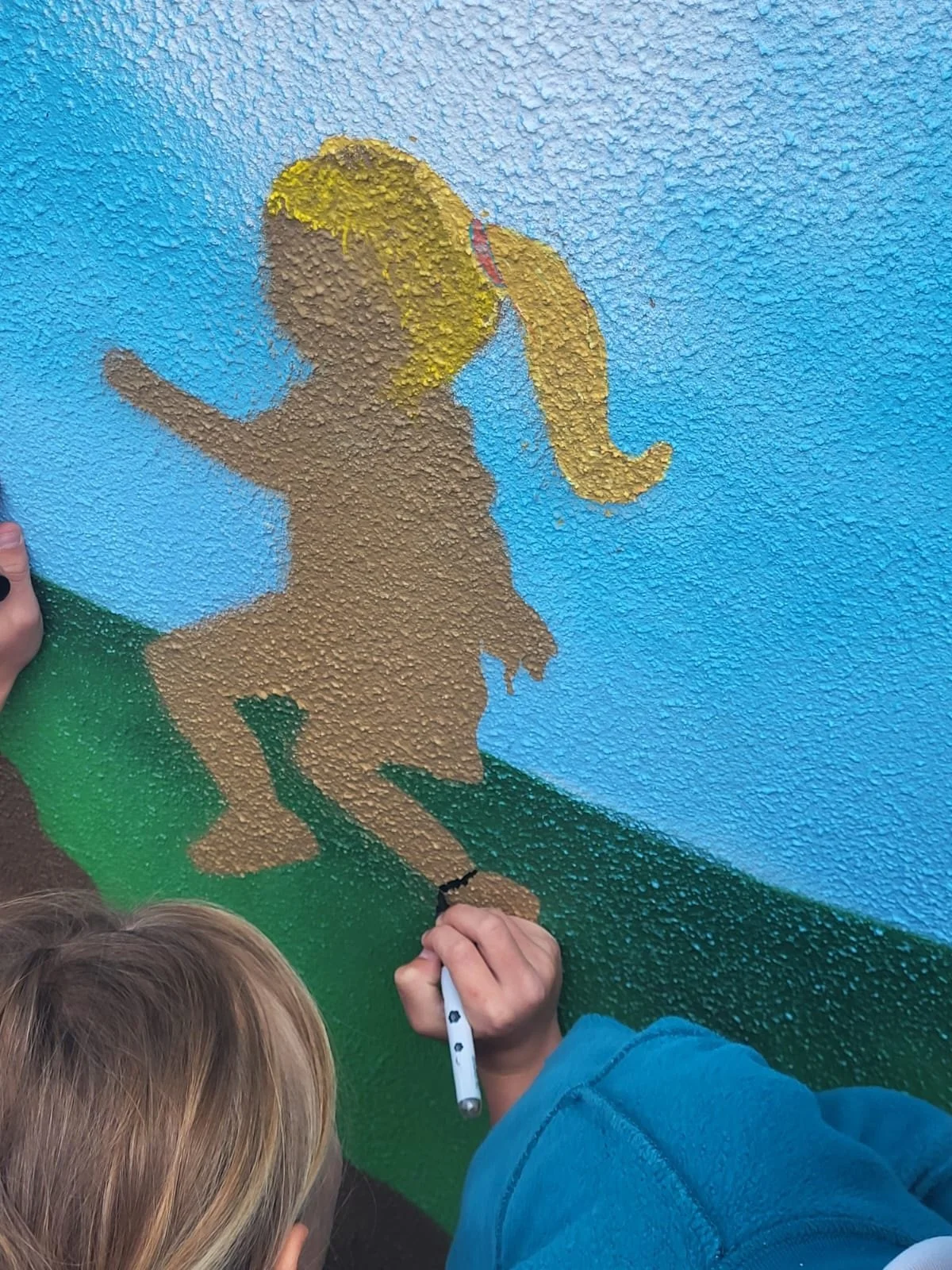
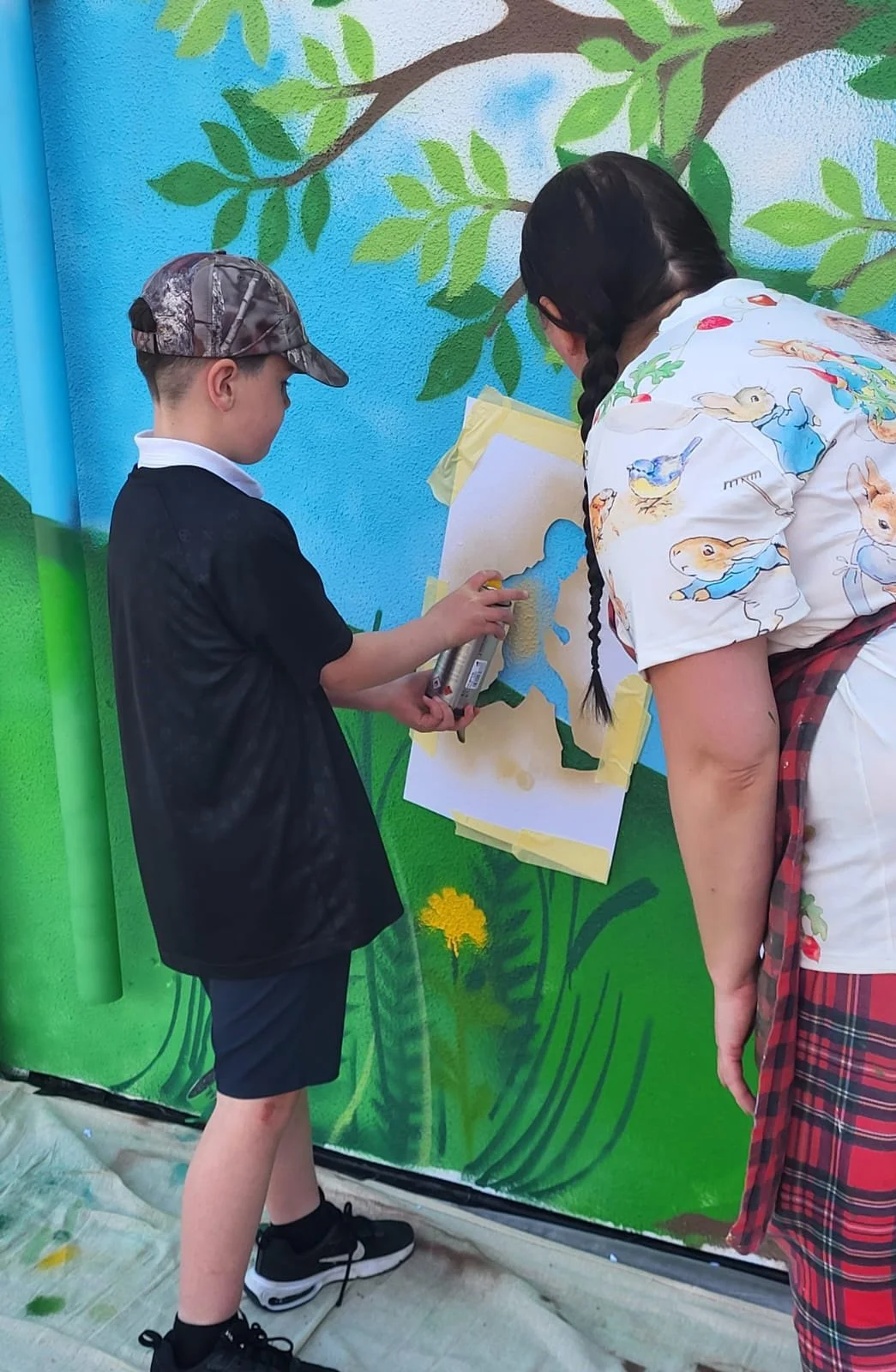
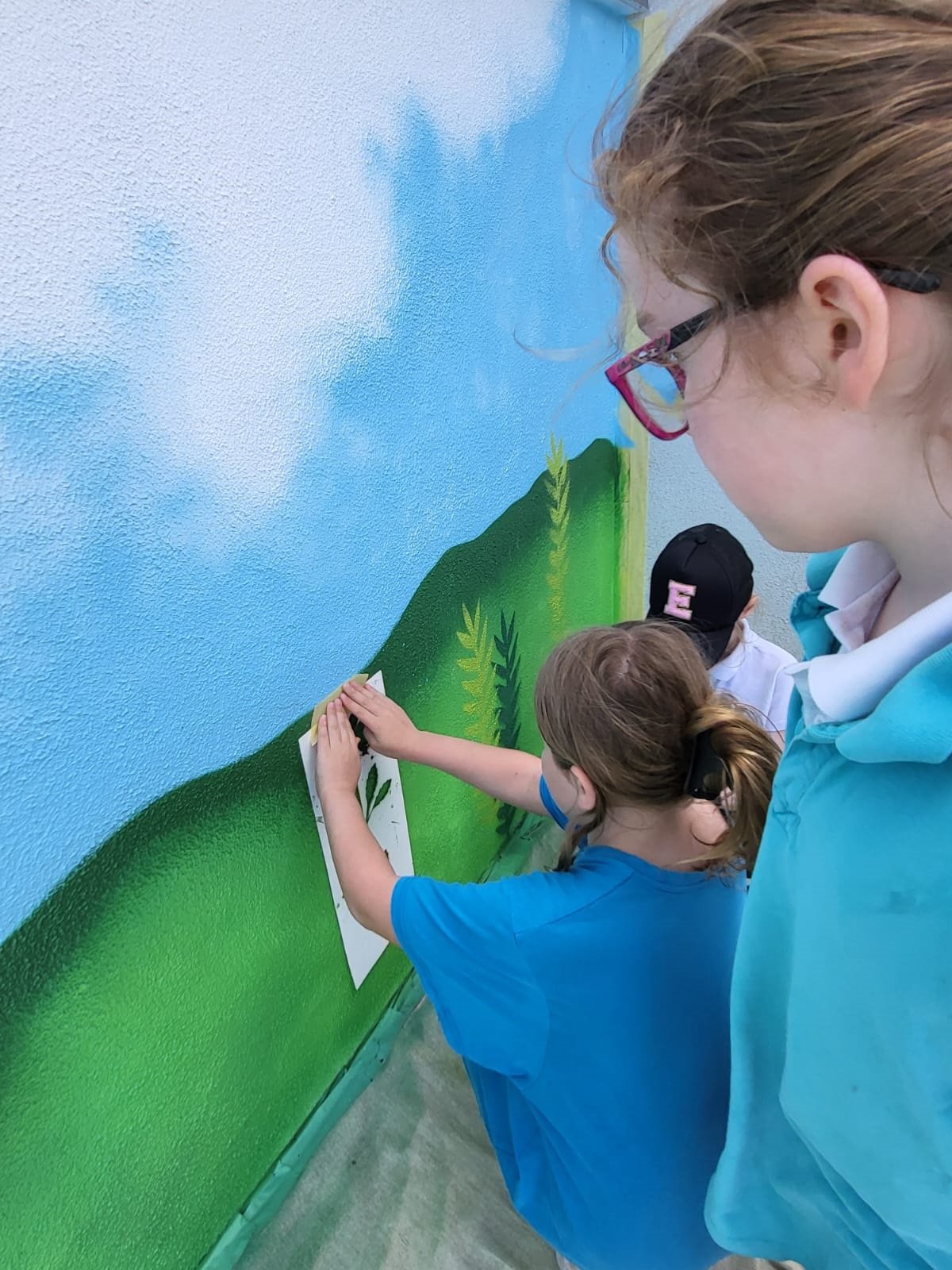
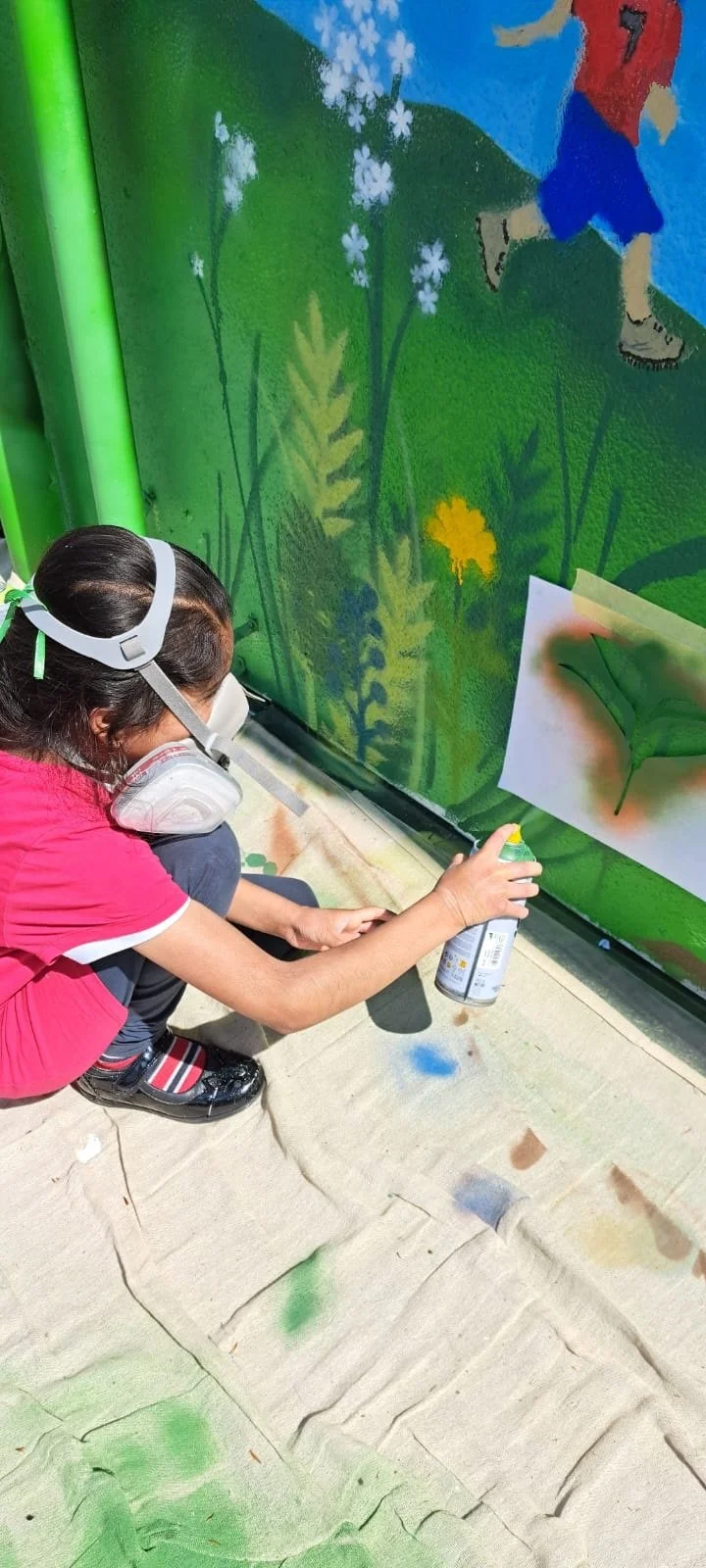
The pupils developed figures that were painted with stencils and practised using water-based spray paint outdoors. We looked at how distance, movement and the amount of paint used could change the quality of an image and how a simple silhouette could become the starting point for something much more individual.
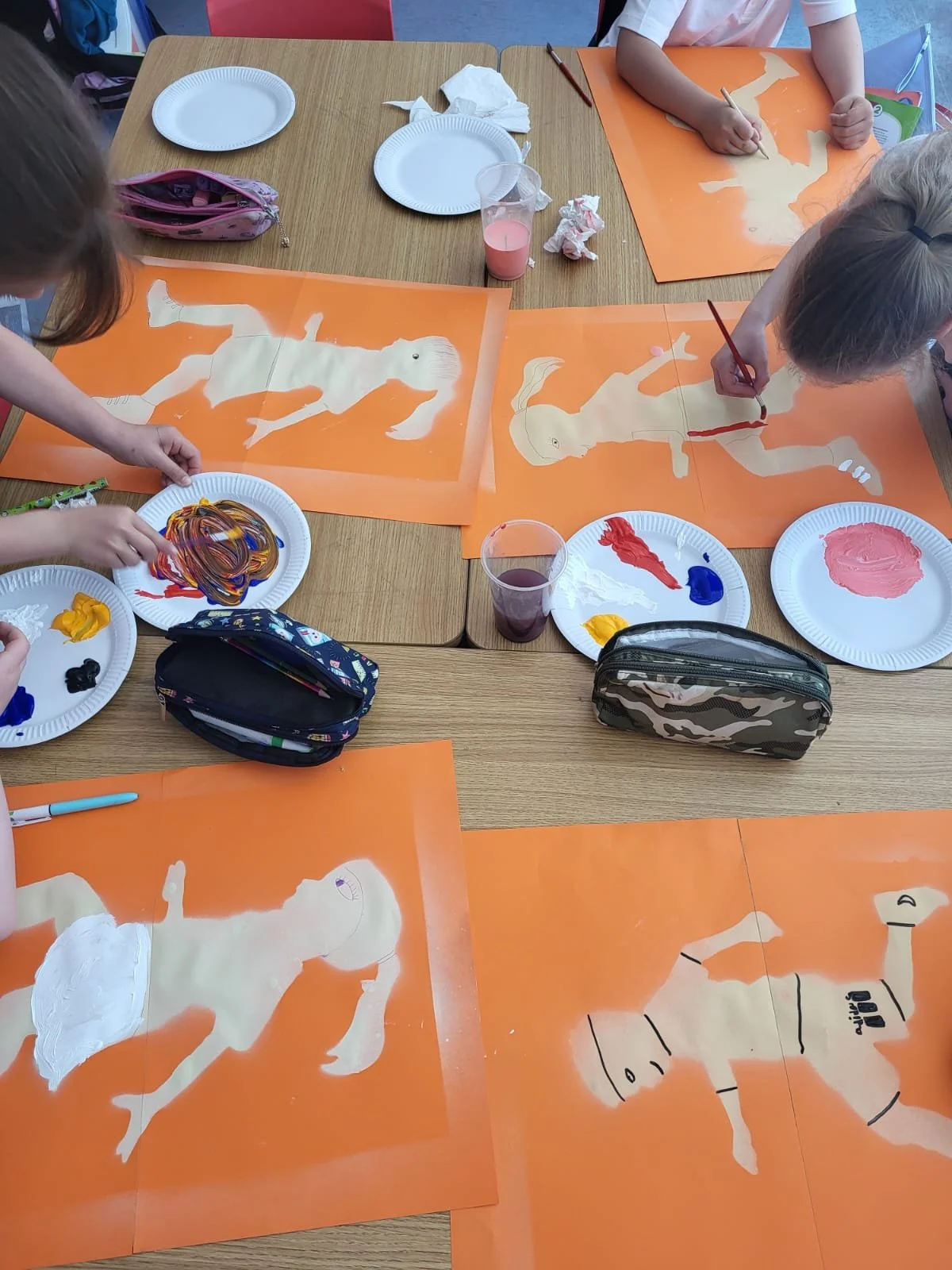
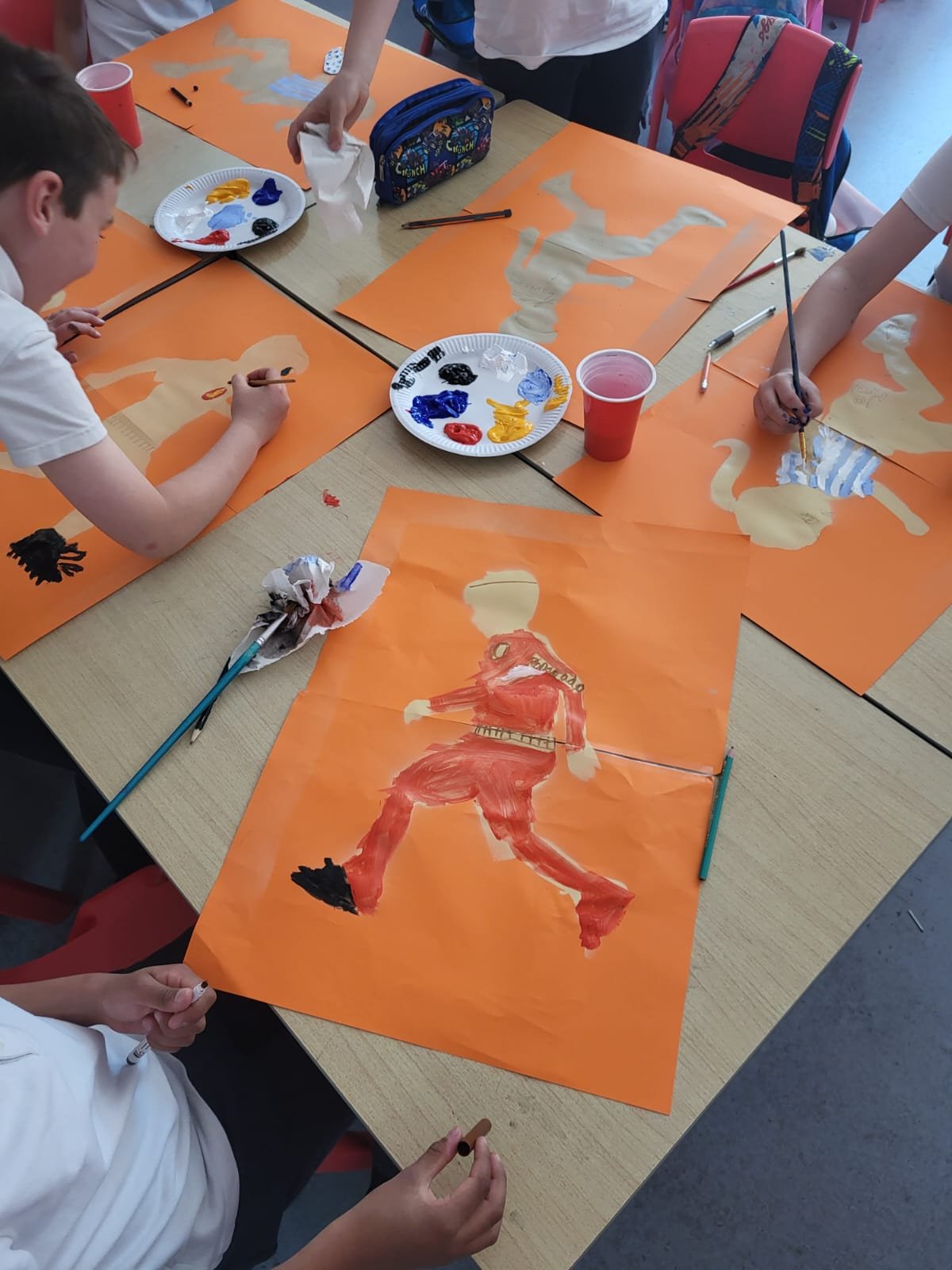
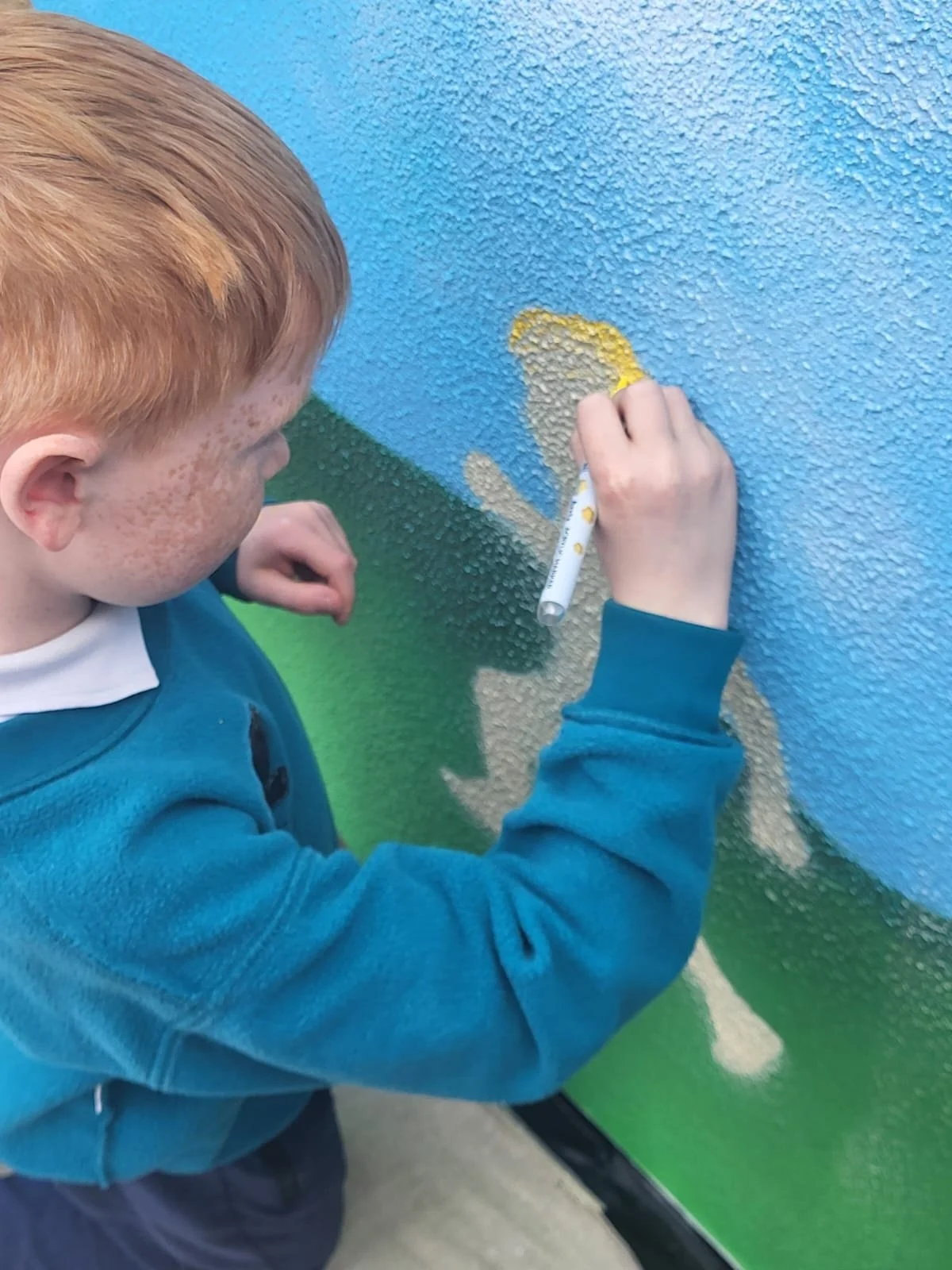
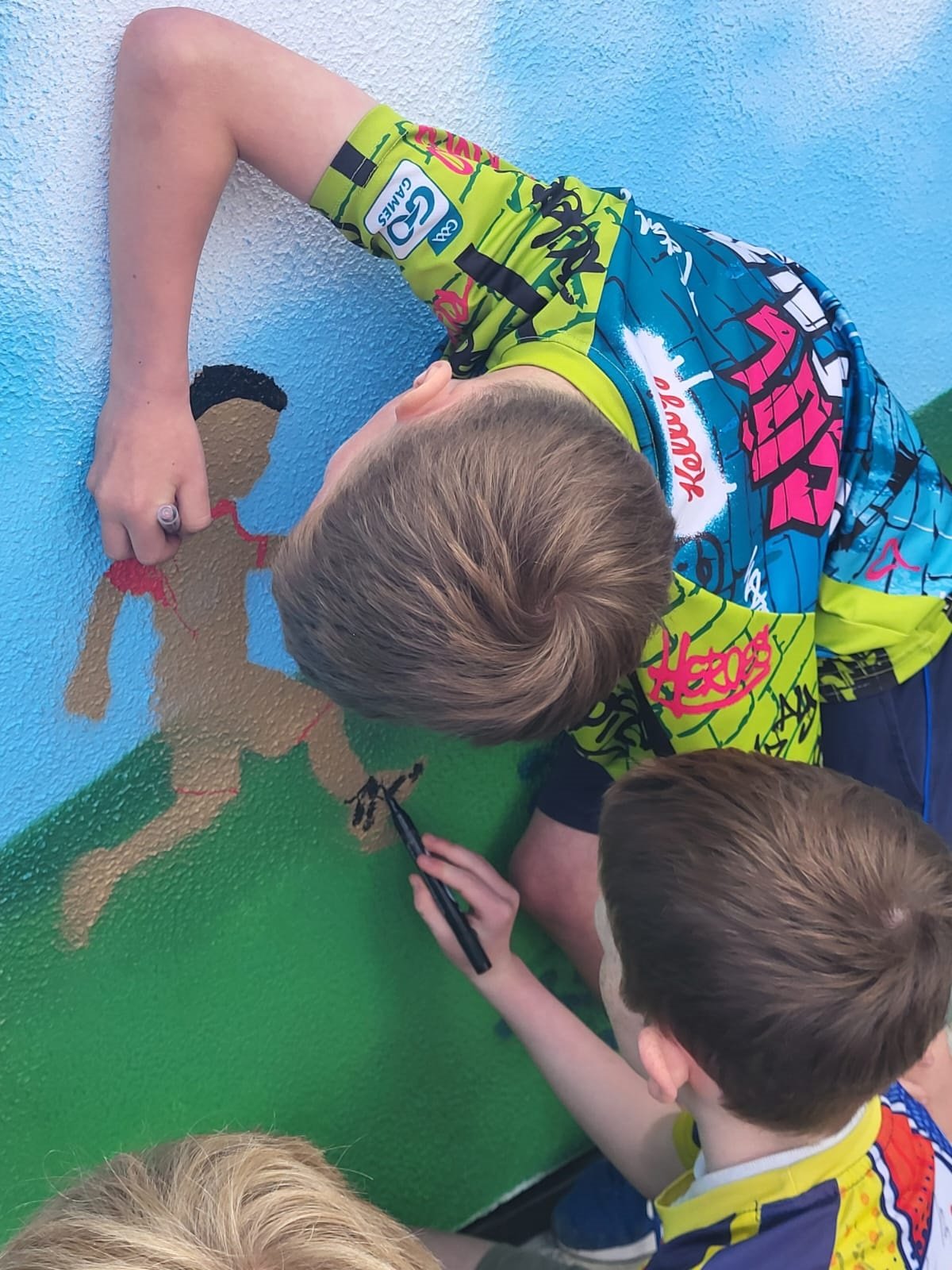
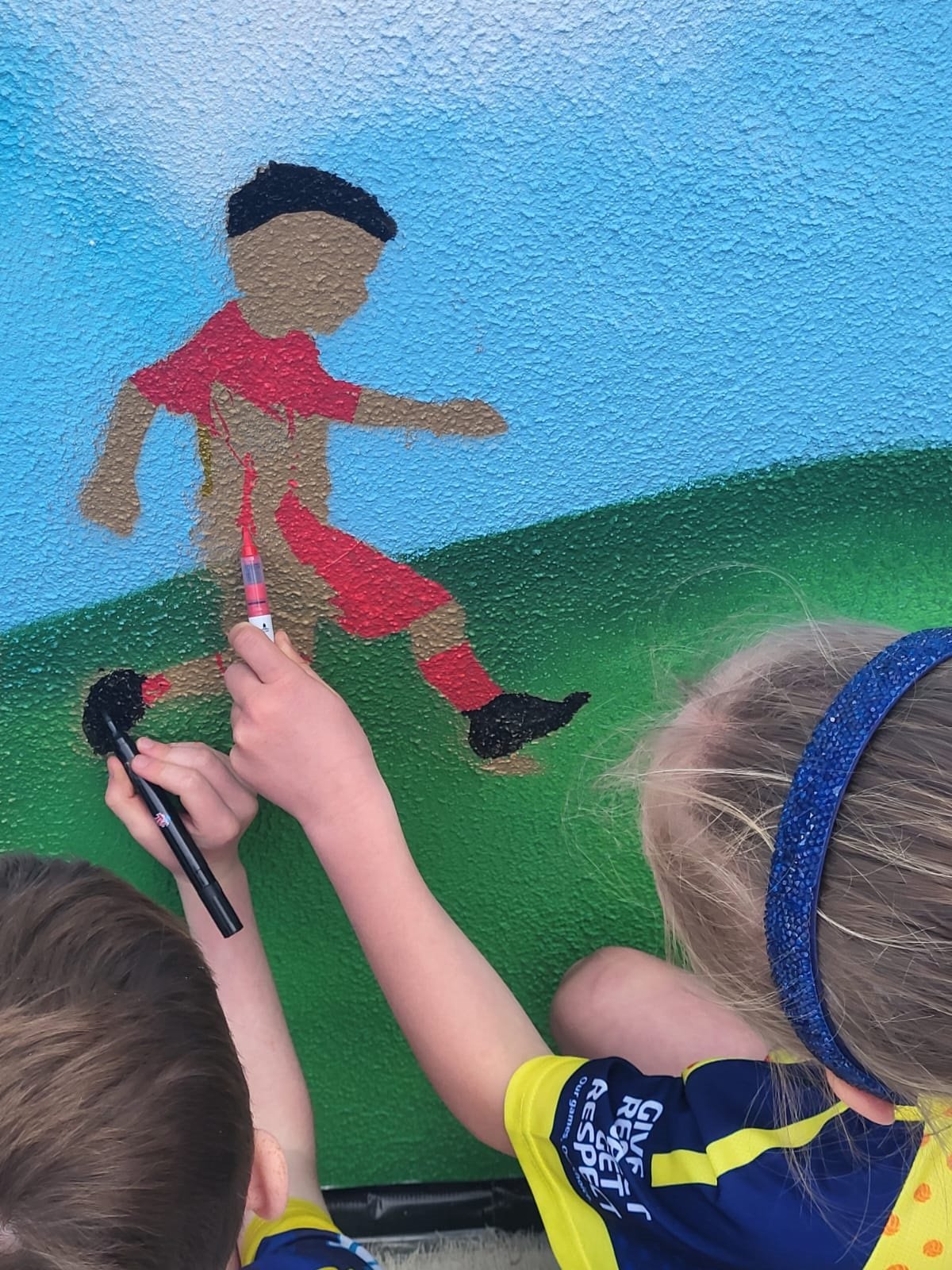
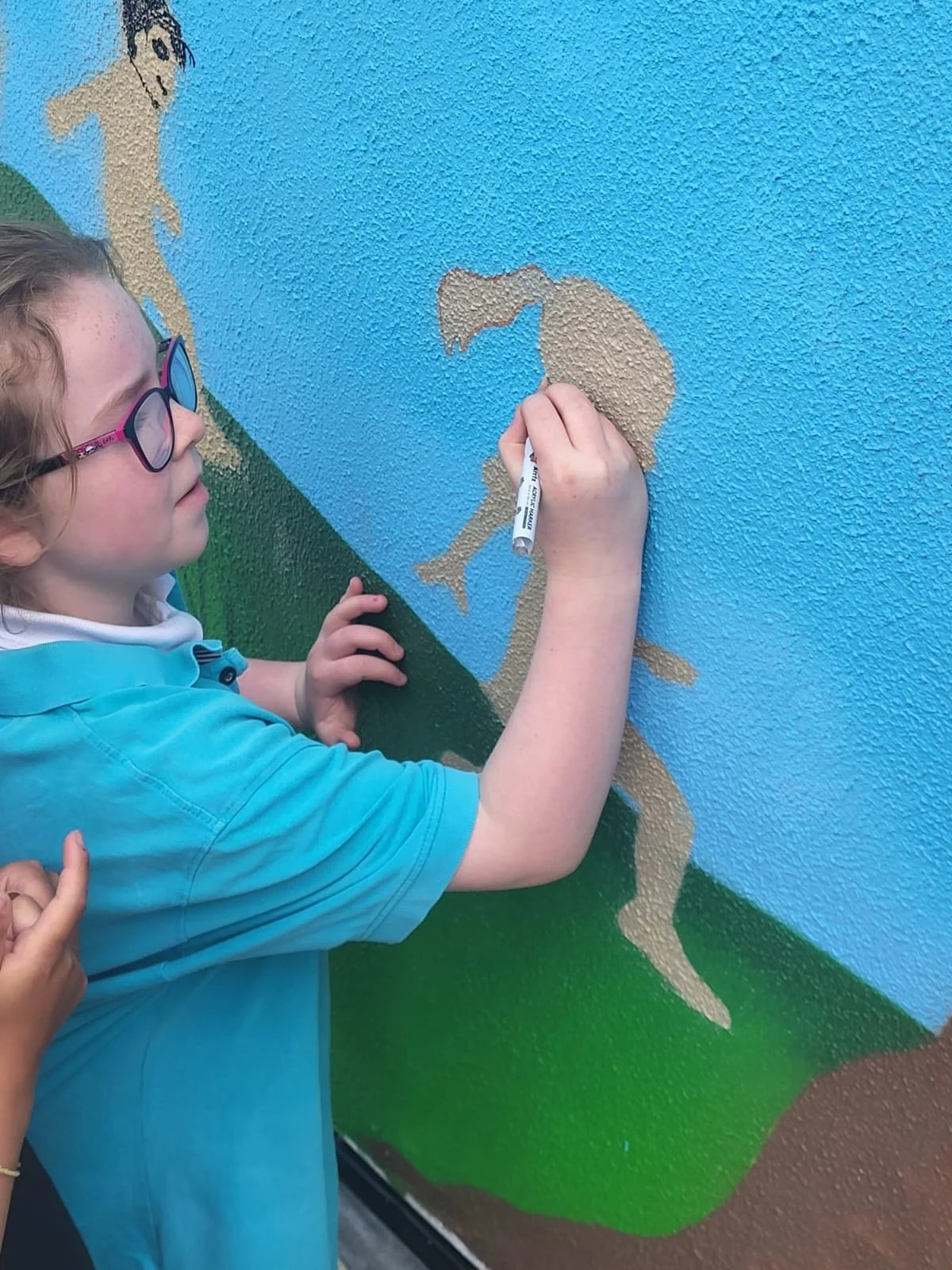
Back in the classroom, the pupils painted into their stencilled figures, adding clothing, faces, colour and small details.
I particularly liked this stage because the children could see that the stencil itself wasn’t the finished artwork. It was simply one tool. The same form could be repeated and then completely changed through colour, painted marks and detail.
It was also useful for me as a facilitator. Working with the class in this way gave me a chance to see where individual pupils’ strengths lay. Some were particularly confident with detailed brushwork, while others took naturally to different parts of the process. I could begin thinking about how those strengths might translate to the wall and which pupils might be best suited to painting the finer details into the stencilled figures when we reached the mural itself.
That freedom to experiment is something I try to bring into collaborative projects. An artwork doesn’t arrive fully formed. Things can be tested, changed, painted over, developed and tried again.
From classroom scale to mural scale
Eventually, we were ready for the wall.
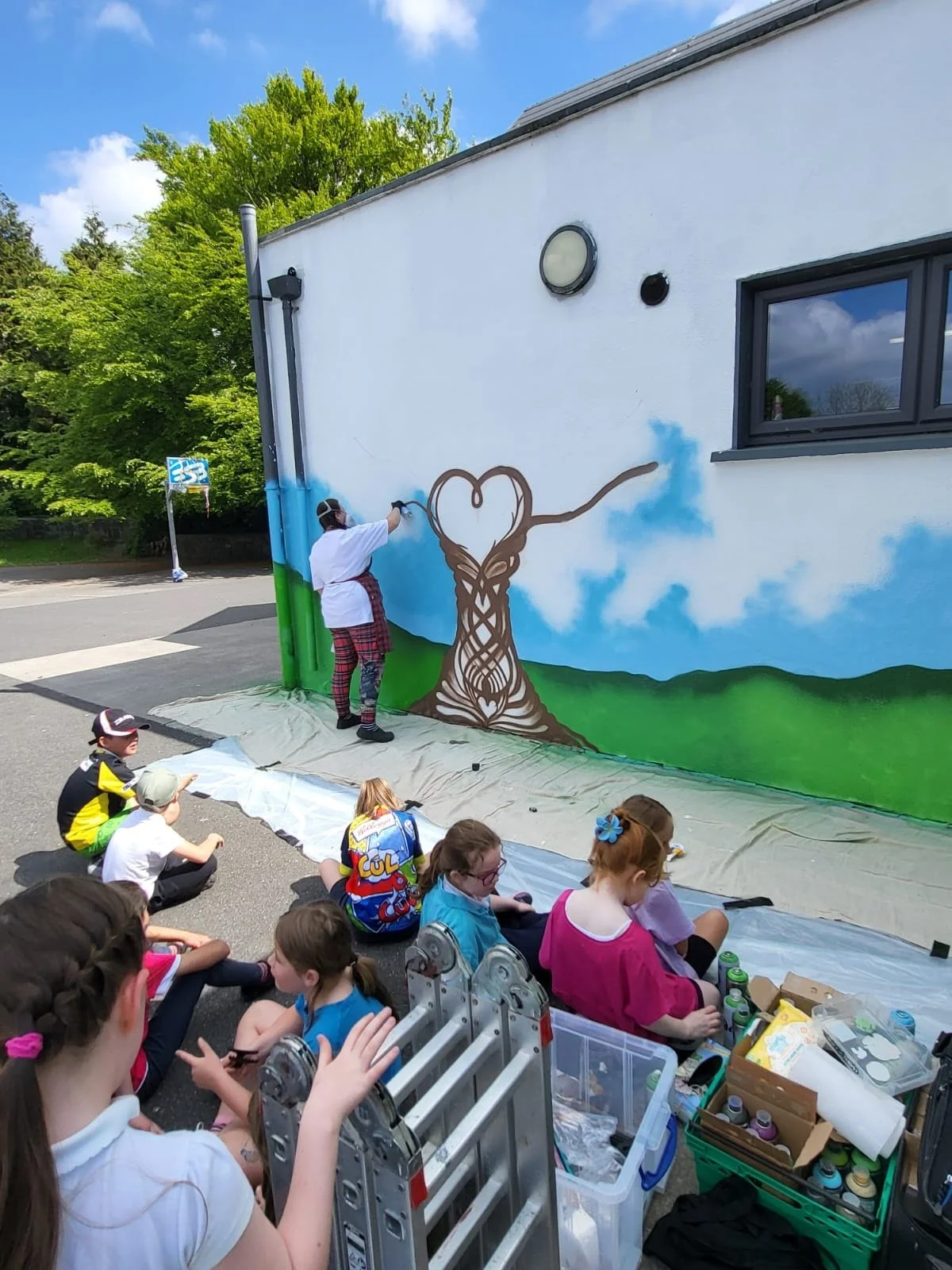
The class helped prepare and prime the surface together, taking turns with rollers until the existing wall had become our new blank canvas.
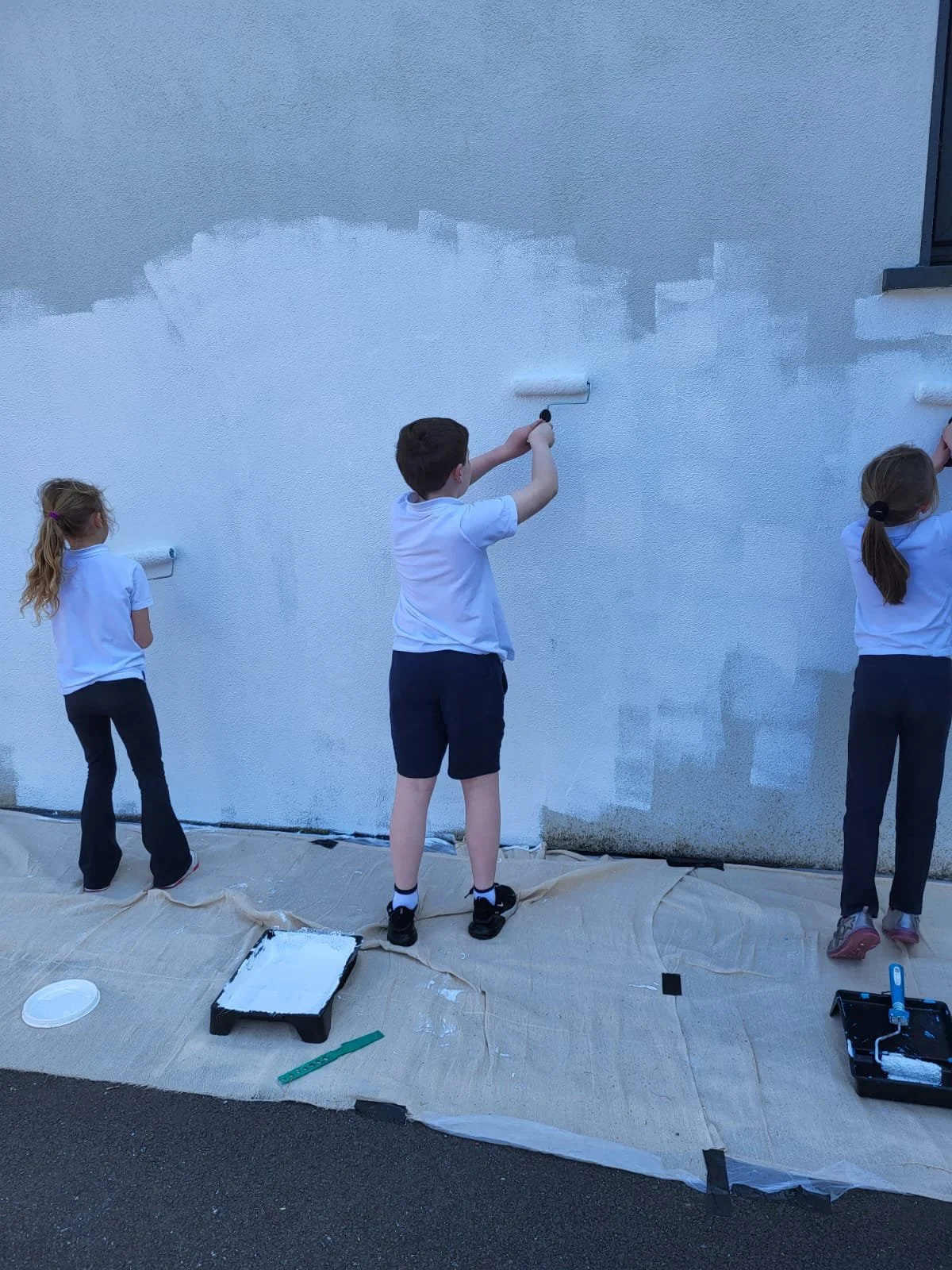
Priming the wall
There is always something exciting about this part of a project.
Ideas that have existed on sheets of paper and classroom tables suddenly have to work across architecture. Everything changes in scale, a small figure becomes several feet high, a painted flower becomes part of an entire landscape and individual drawings have to begin working together as one composition.
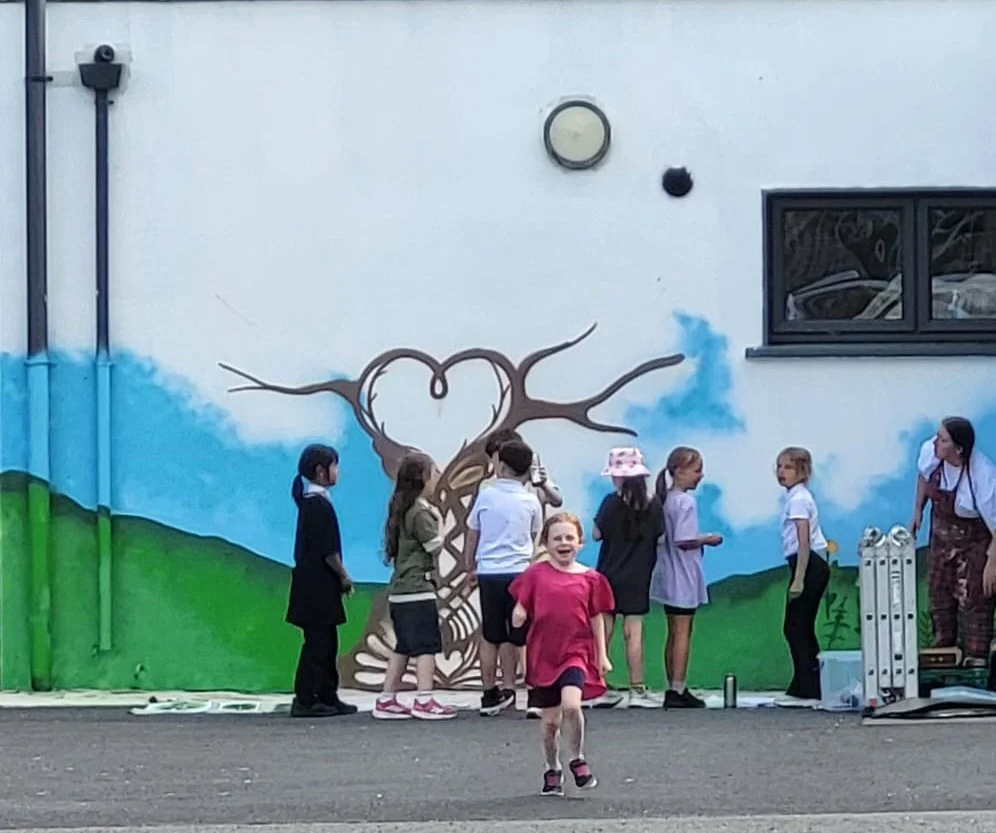
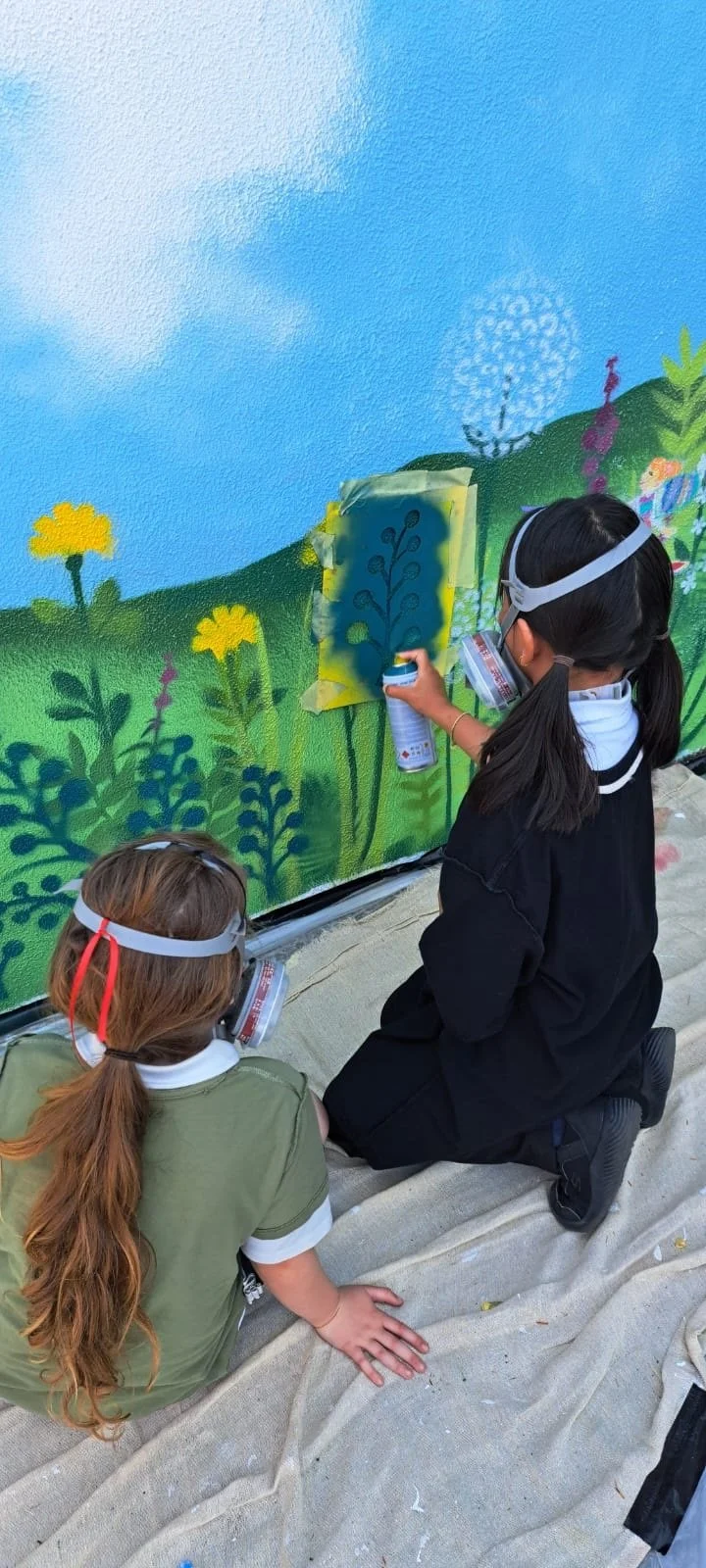
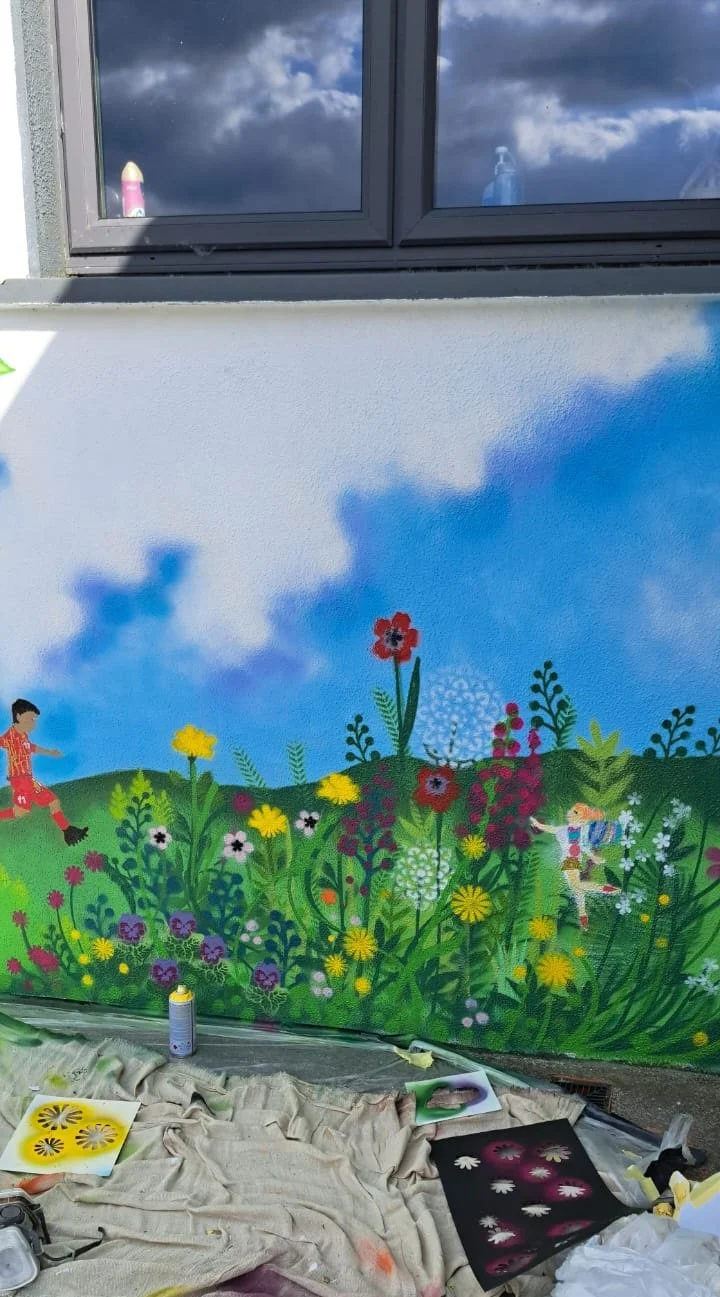
Over two full mural-painting days, the children helped build the artwork layer by layer.
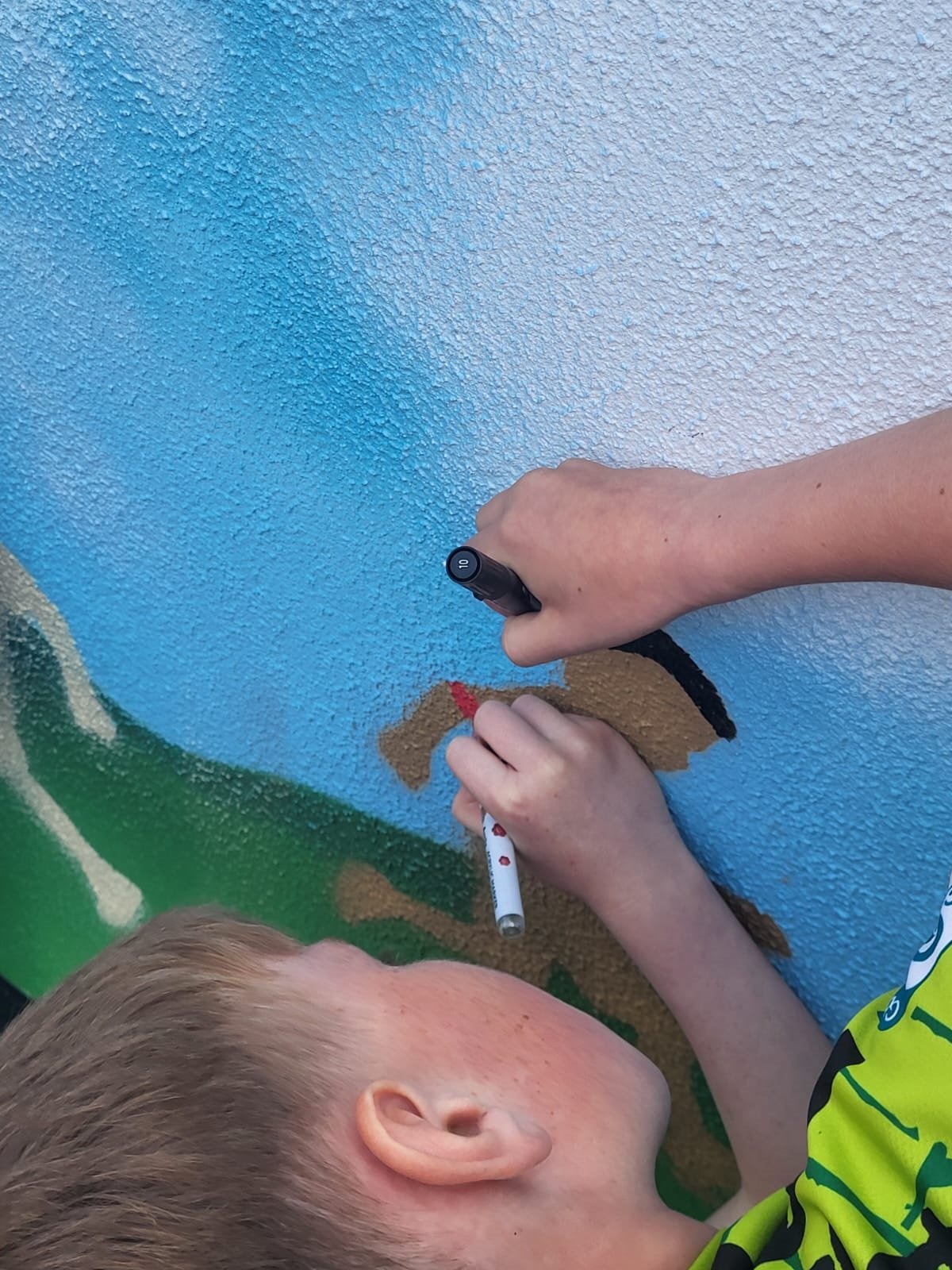
They painted backgrounds, spray-painted designs through stencils and added details by hand. Every pupil had the opportunity to contribute directly to the finished mural, from preparing the wall through to the imagery that remained on it.
The project was described afterwards as “artist-led and child-powered”, which feels like a pretty good description of what happened.
Painted Together
At the centre of the finished mural, the love-knot tree rises across the wall, its branches stretching outwards and its heart-shaped centre framing the castle at Lough Key.
Below it, children run and play through a colourful landscape filled with wildflowers.
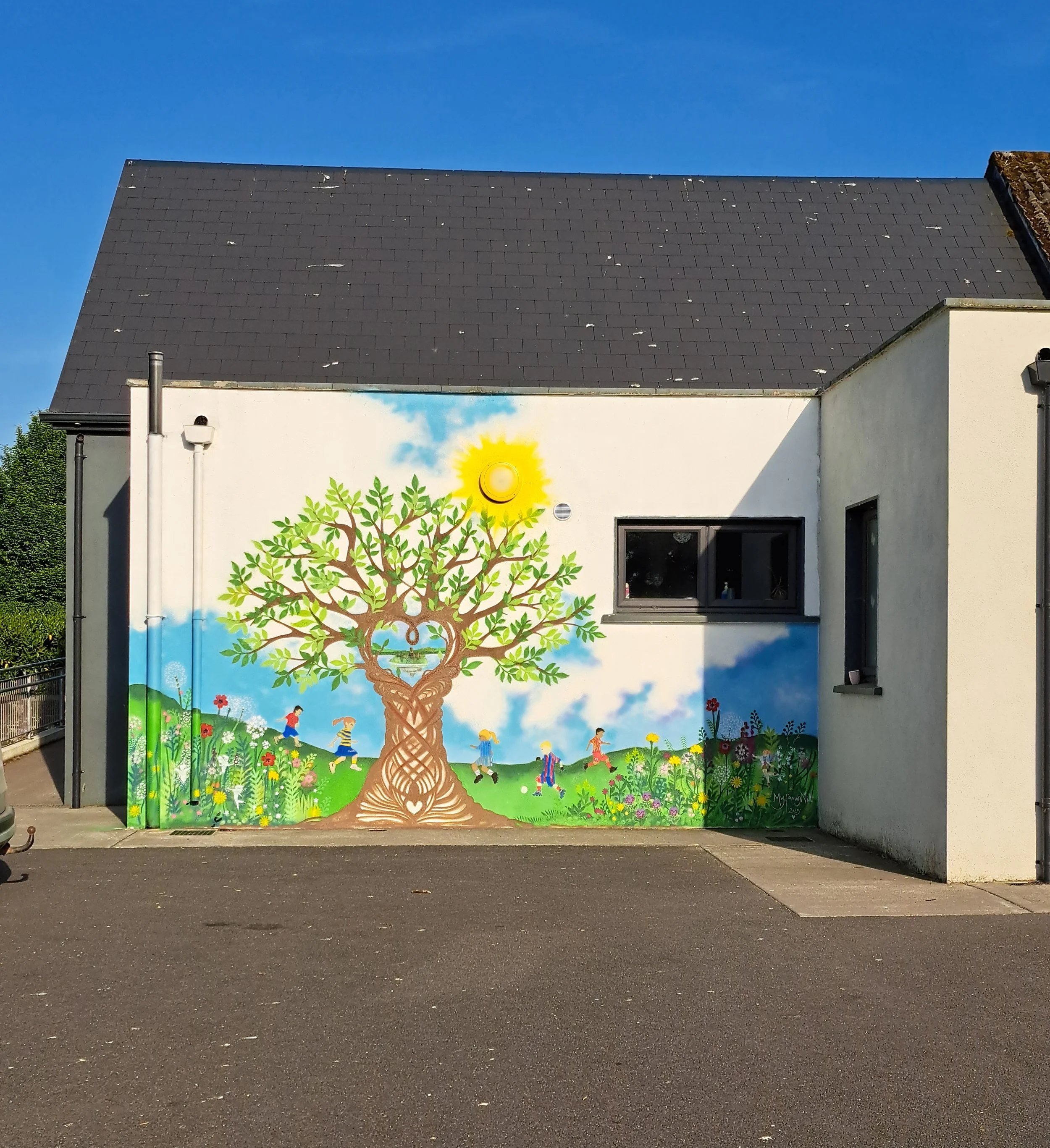
What I particularly like about the finished piece is that the children’s contribution remains visible within it.
The figures retain their different gestures and personalities. Their flowers became part of the landscape. Ideas that started as drawings at a classroom table were enlarged, layered and brought together into a permanent artwork in their own schoolyard.
There was a strong sense of ownership when the mural was finished, with pupils proudly recognising and pointing out the parts they had contributed. That pride extended beyond the class too. Other children began gathering around the mural during break times and the pupils were excited to bring family members over to show them what they had made.
For me, that is an important part of collaborative mural work.
The finished wall matters, but so does everything that happened before it: looking, drawing, talking, experimenting, learning new techniques, solving problems and gradually understanding how many small decisions are involved in making an artwork.
By the time we painted the wall, the pupils hadn’t simply been invited to colour in somebody else’s mural. They had experienced the journey that led to it.
And when the mural became part of their playground, they could look at it and genuinely say:
we made this.
Project support
Painted Together was delivered as part of the Teacher Artist Partnership+ (TAP+) Residency programme, supported locally by Carrick-on-Shannon Education Centre. The programme provided the framework for Lorraine and I to work together over the ten-week residency, bringing my professional arts practice into the school and developing the project collaboratively with the pupils.
As our ideas for the mural developed, we also had to consider the practical reality of taking those ideas from the classroom onto a large exterior wall. The school had very limited funding available for art materials and creating the mural at this scale required exterior paint, spray paint and other specialist supplies.
I reached out to Roscommon Arts Office, who generously provided additional funding towards the cost of the mural materials. That support meant we could take the work the children had developed during the residency and realise it properly at scale, rather than having to reduce the project because of material costs.
I’m very grateful to Carrick-on-Shannon Education Centre, Roscommon Arts Office, Abbey Primary School and Lorraine for supporting the project and particularly to the 26 Second Class pupils who brought so much enthusiasm and imagination to it.